THE TARKA GUIDE
How to use a pressure cooker for Pakistani cooking
What a pressure cooker is genuinely good for in a Pakistani kitchen, what it ruins, and how to convert a stovetop recipe safely.
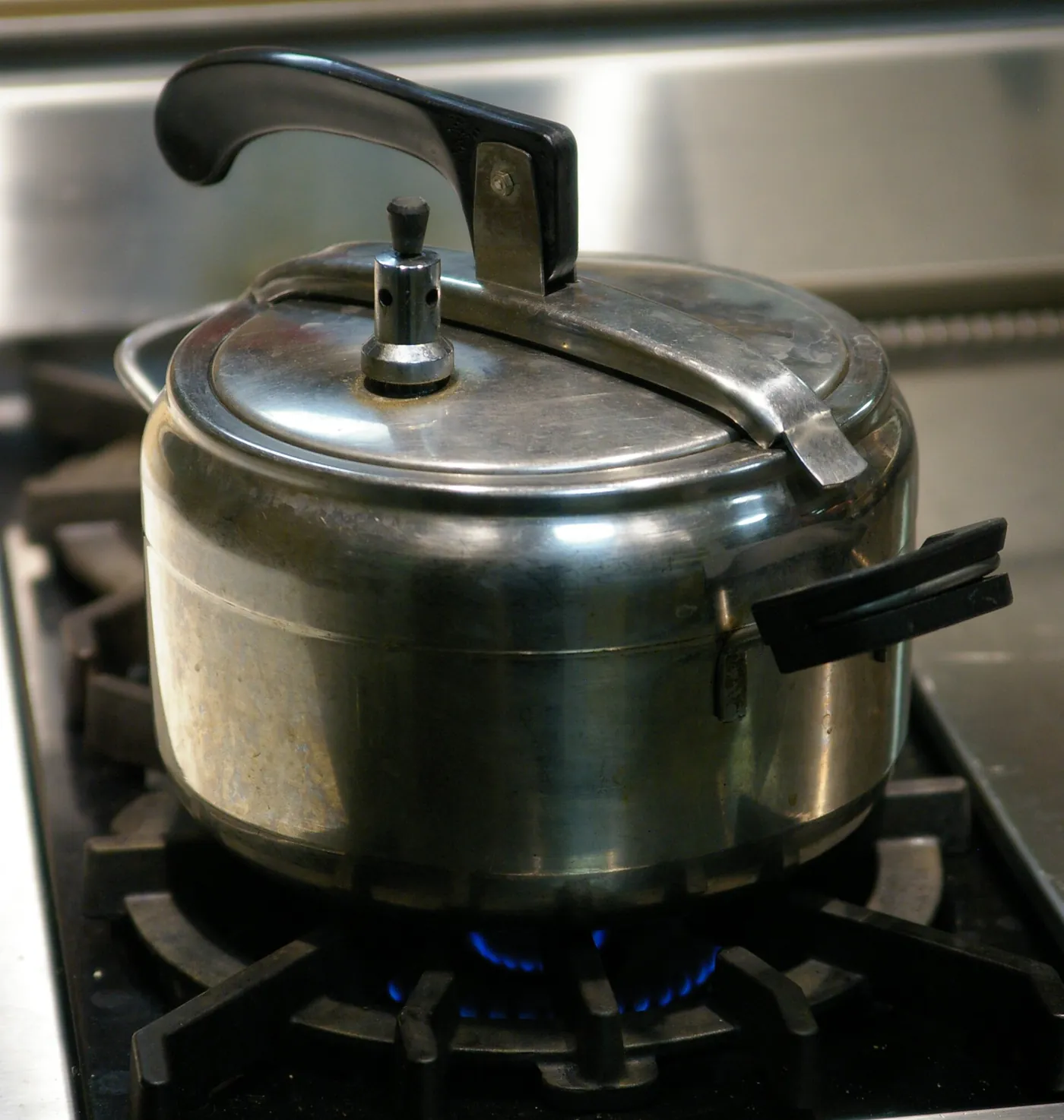
Where a pressure cooker genuinely helps
A pressure cooker earns its place in a Pakistani kitchen for the same reason it does in any kitchen: collagen, lentils and bone-in meat that would otherwise need two to three hours on the hob. Beef nihari, paye and haleem all collapse to the right texture in a fraction of the time, and there is a secondary benefit specific to this cuisine — because the cooking time is shorter, there is less opportunity for the masala to scorch against the base of a heavy karahi, which is the usual way a long braise goes wrong. Pressure cooking is also markedly cheaper than a tandoor or grill for the same result on bone-in meat, since the liquid does not evaporate.
What it does badly, and what to cook on the hob instead
It is just as important to know what the lid is bad at. Anything that needs the water to leave the pot is ruined: a karahi, where the tomato masala is supposed to reduce and the oil is supposed to separate from the gravy, becomes a thin, watery sauce. The same goes for a dry-roast masala, seared kebab, and anything where the dish is finished by evaporation. Use the hob for the recipes on this site that are built on reduction — Chicken Karahi, Mutton Karahi and Beef Nihari as a finished dish — and use the pressure cooker for the braises underneath them.
Tarka note: Let aroma and texture confirm the clock. Timings vary with pan width and burner strength.
How much liquid to use, and how much time to cut
Pressure cooking is also fussier about liquid than people expect, in both directions. Under-filling means the contents catch and scorch, and there is no evaporation to rescue you, so the food must stay submerged. Over-filling means the liquid cannot boil freely and will take far longer than the manual suggests. Use the same volume of liquid the stovetop recipe specifies, subtract about a quarter cup, and never fill the pot more than two-thirds full. On time, most cuts cook in roughly a third to a half of their stovetop time, which is why you pressure a whole chicken for 20 minutes where it would take an hour on the hob. Check the appliance manual, because a stovetop and electric pressure cooker differ more than the packaging admits.
Pressure-cooking biryani and pulao rice
Rice is the case that catches people out. Biryani and pulao are built on the principle that the grain stays separate and every grain is evenly cooked, and pressure cookers hold the heat far too evenly for that. The pressure forces water into the centre of each grain before the starch has had time to set on the outside, so the rice goes soft and pasty however carefully you measured it. Cook the meat under pressure if you like, then release it and cook the rice separately on the hob — this is the approach taken in How to keep biryani rice separate, and it is why that guide exists.
Release, rest and the mistakes that cause scorch
Two mistakes account for most pressure-cooker disasters. The first is releasing the lid too fast: a sudden pressure drop throws the hot contents up the vent, so let the heat drop naturally for ten to fifteen minutes and let the pressure fall on its own before you touch the valve. The second is going straight back to full heat after adding ingredients, which is how the base scorches — and with no evaporation to thin the liquid back down, a scorch cannot be fixed by adding water. When you open the pot, loosen the lid away from your face in case the steam is still venting, and give the food a good stir before tasting, because salt has concentrated in whatever liquid remains.
Questions cooks ask about this
Can I use a pressure cooker for mutton karahi?
Use it for the meat, not the finished dish. Pressure-cook the bone-in mutton until tender, then release the pot and finish the masala on the hob so the tomato reduces and the oil separates, as the dish requires. Adding the raw masala inside the pressure cooker will produce a thin sauce with no depth.
How long does mutton take in a pressure cooker?
Roughly 30 to 40 minutes at high pressure after the liquid comes up, against 75 to 90 minutes on the hob, though it depends heavily on the cut and your cooker. Check for tenderness rather than trusting the clock, because undercooked mutton stays tough no matter how long the masala was cooked.
Why does my pressure cooker food taste scorched?
Usually not enough liquid, or the heat was returned to full too quickly after the contents went in. With no evaporation there is nothing to dilute a scorch, so the base catches. Use the same volume of liquid as the stovetop recipe less a quarter cup, never fill the pot more than two-thirds, and stir thoroughly once you have released the pressure.