A slow-simmered breakfast stew
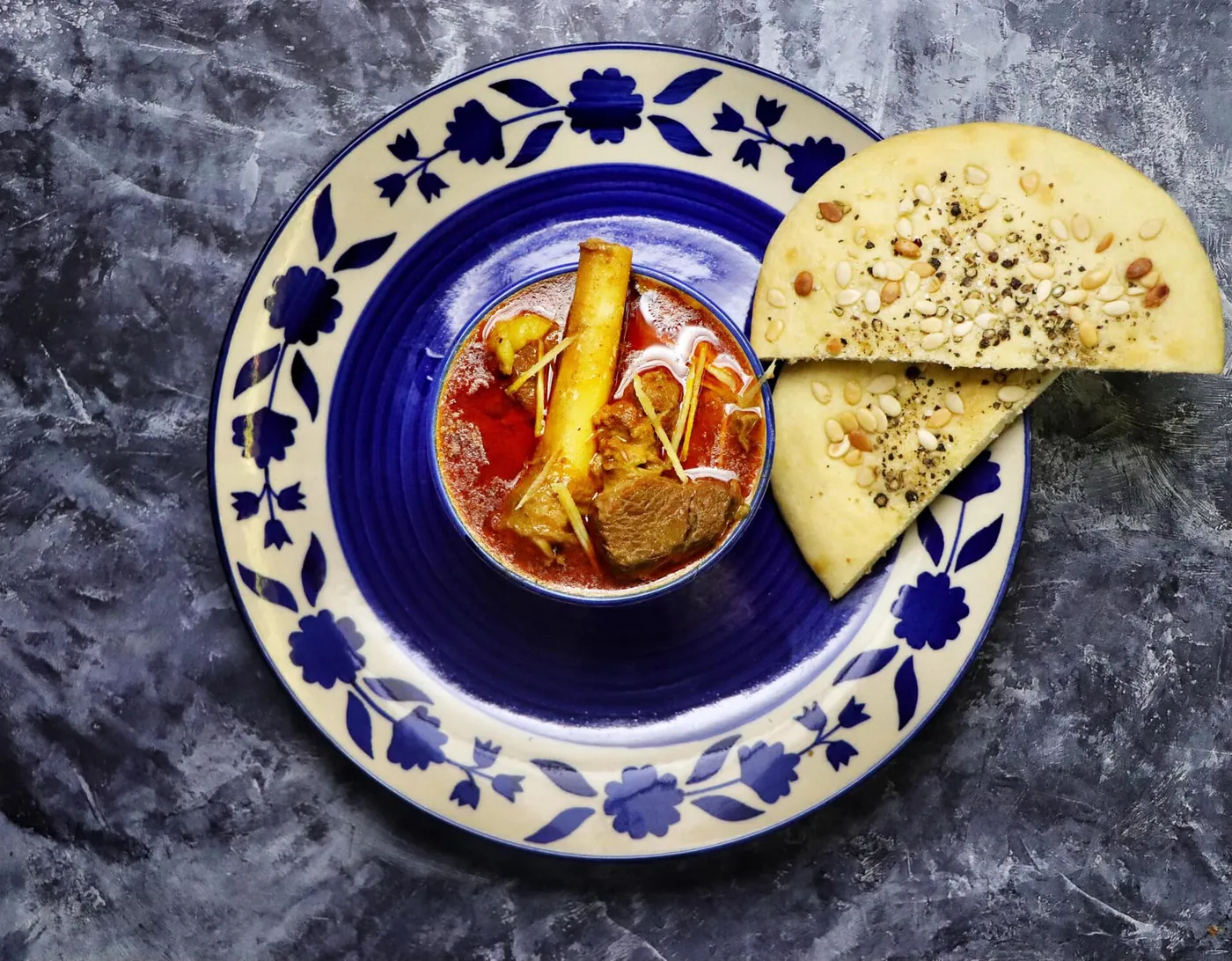
A slow-simmered breakfast stew of bone-in shank and toasted spices, thickened with wheat flour and finished with ginger and lemon.
Nihari rewards time, not attention — the meat and bones simmer for hours on low heat until the connective tissue breaks down and the gravy thickens on its own, largely unattended once it is set to cook.
What is beef nihari?
Nihari is a slow-cooked stew traditionally eaten at breakfast, built on shin or shank cuts cooked with a toasted nihari masala (whole spices ground together) until the meat is fall-apart tender. A small amount of atta (wheat flour) mixed with water is often stirred in near the end to give the gravy its characteristic thick, glossy body — it is not thickened by reduction alone.
Ingredient notes and substitutions
Bone-in shank is worth seeking out specifically: the marrow that renders out during hours of simmering is what gives nihari its depth, not something a boneless cut can replace. Toast the nihari masala spices whole before grinding rather than using a pre-mixed powder — the aroma fades fast once ground.
Common mistakes
Rushing the simmer is the main failure — nihari needs 3 to 4 hours minimum for the meat to turn properly tender, and cutting that short leaves it chewy no matter how good the masala is. Adding the atta slurry too early, before the meat is fully tender, can also make the gravy gluey rather than silky.
What to serve with it
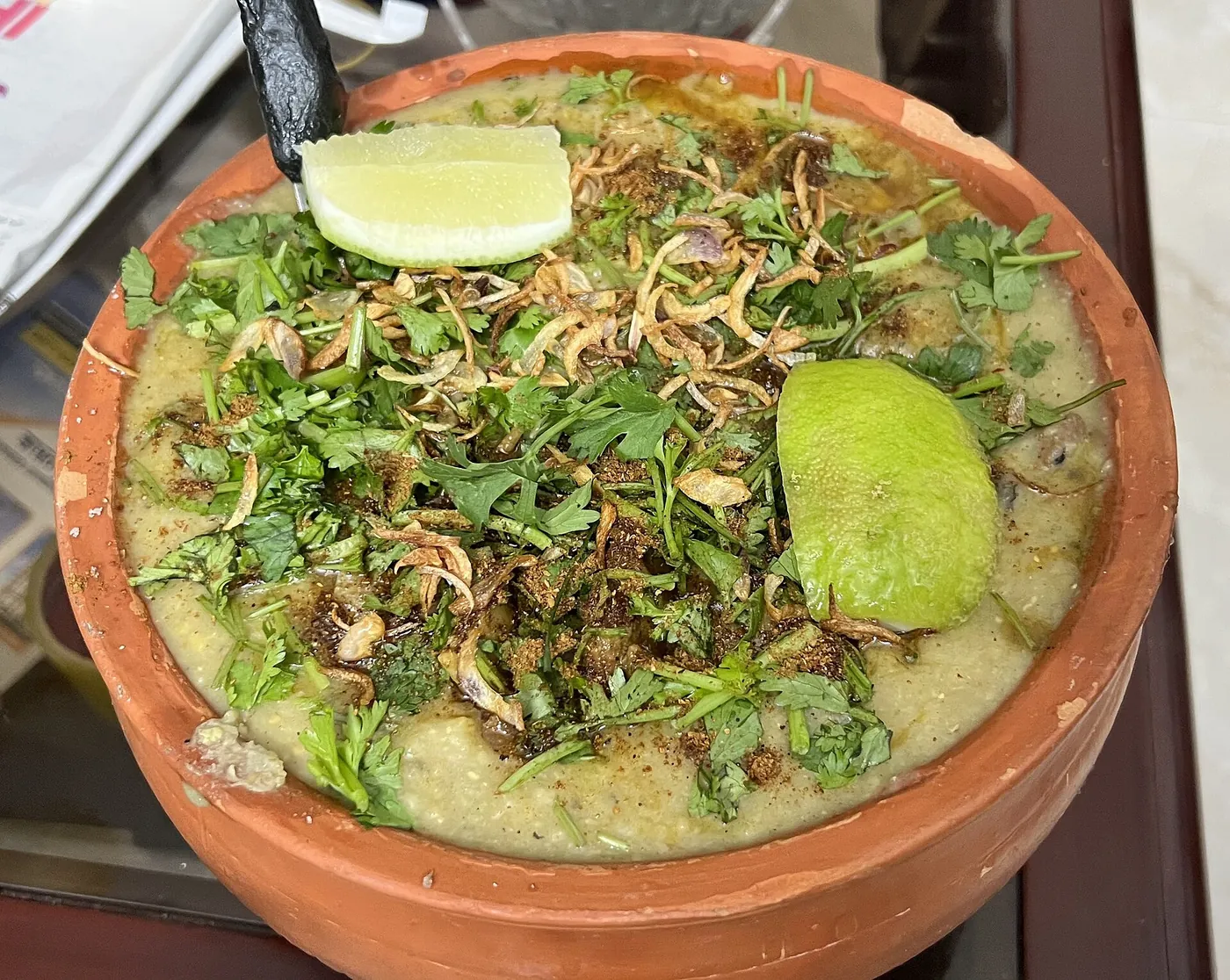
Finish each bowl with julienned ginger, sliced green chilli, chopped coriander and a squeeze of lemon — these are not optional garnishes but part of how the dish balances its richness. Serve with naan for scooping rather than a spoon-only presentation.
Storage and reheating
Nihari keeps and reheats exceptionally well — refrigerate up to four days or freeze in portions. Reheat gently on the stovetop, adding a splash of water if the gravy has thickened further in the fridge.
Frequently asked questions
Can I make nihari in a pressure cooker to save time?
Yes. In a stovetop pressure cooker, cook the browned meat and masala with about 1.5 litres of water for roughly 45–60 minutes at full pressure, let the pressure release naturally, then thicken with the atta on the open pot as written. Check your cooker’s manual for its maximum fill line, which a nihari can easily exceed.
My nihari gravy is thin — how do I thicken it?
Whisk another 1–2 tbsp of atta into cold water, stir it into the simmering nihari and cook a further 10–15 minutes so the flour taste cooks out. Add it gradually — it's easy to over-thicken.
What cut of beef should I use for nihari?
Bone-in shank or shin is the standard choice — the marrow and connective tissue that render out over hours of simmering are what give nihari its body and can't be replicated with a leaner, boneless cut.