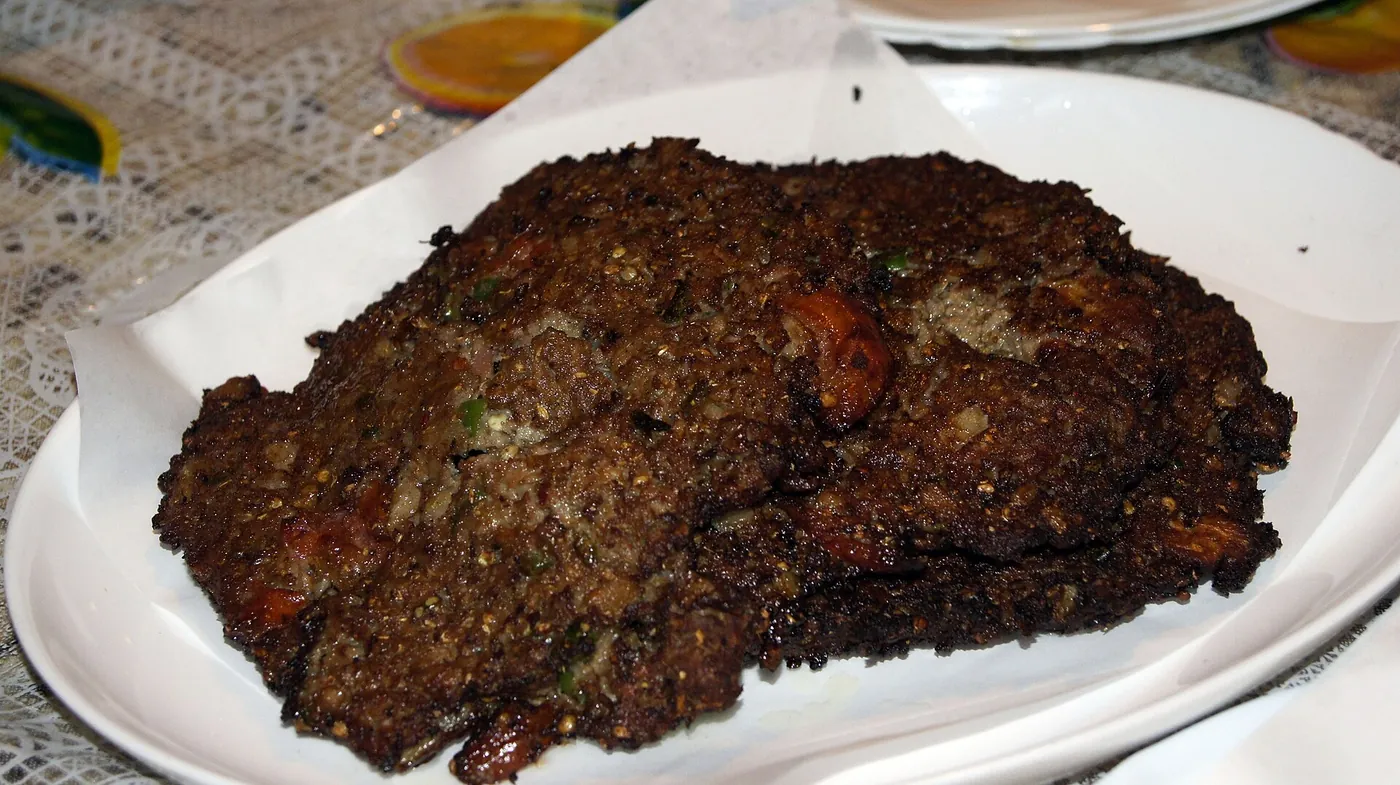
A wide, pan-fried minced beef kebab
A wide, flat minced-beef patty from Peshawar, seasoned with crushed coriander and dried pomegranate seeds and fried until crisp at the edges.
Chapli kebab is shaped flat and wide rather than round, which is what lets it cook through quickly in a pan while developing a well-browned crust on both sides.
What is chapli kebab?
Chapli kebab is a minced beef patty from Khyber Pakhtunkhwa, traditionally from Peshawar, mixed with coarsely crushed coriander seeds, anardana (dried pomegranate seeds), chopped tomato and onion, then shaped wide and thin and pan-fried in a generous amount of fat. The name is usually explained by its flat shape, likened to a chappal, or sandal.
Ingredient notes and substitutions
Crush coriander and pomegranate seeds coarsely rather than grinding them fine — the texture is part of the dish's identity, giving bite against the soft minced meat. Chopped tomato and onion are mixed directly into the meat, not just used as a garnish, which is what keeps the kebab moist through frying.
Common mistakes
Making the patties too thick is the most common mistake — chapli kebab is meant to be thin and wide so it cooks through and browns well before the outside overcooks. Skimping on oil also causes sticking and uneven browning; this dish is traditionally shallow-fried, not dry-pan-seared.
What to serve with it
Serve hot, straight from the pan, with naan and sliced onion or a simple salad — chapli kebab is meant to be eaten quickly while the crust is still crisp.
Storage and reheating
Refrigerate cooked kebabs up to two days. Reheat in a dry or lightly oiled pan rather than a microwave, to bring back some of the crisp exterior.
Frequently asked questions
Why do my chapli kebabs fall apart in the pan?
The mixture is likely too wet — chopped tomato and onion release moisture as they sit, so shape the patties soon after mixing, and chill them briefly if they feel too soft to hold together.
Can chapli kebab be baked instead of pan-fried?
It can, on a well-oiled tray at high heat, but the result won't have the same crisp, oil-fried edge that's central to the dish traditionally.