A karahi built on tender meat
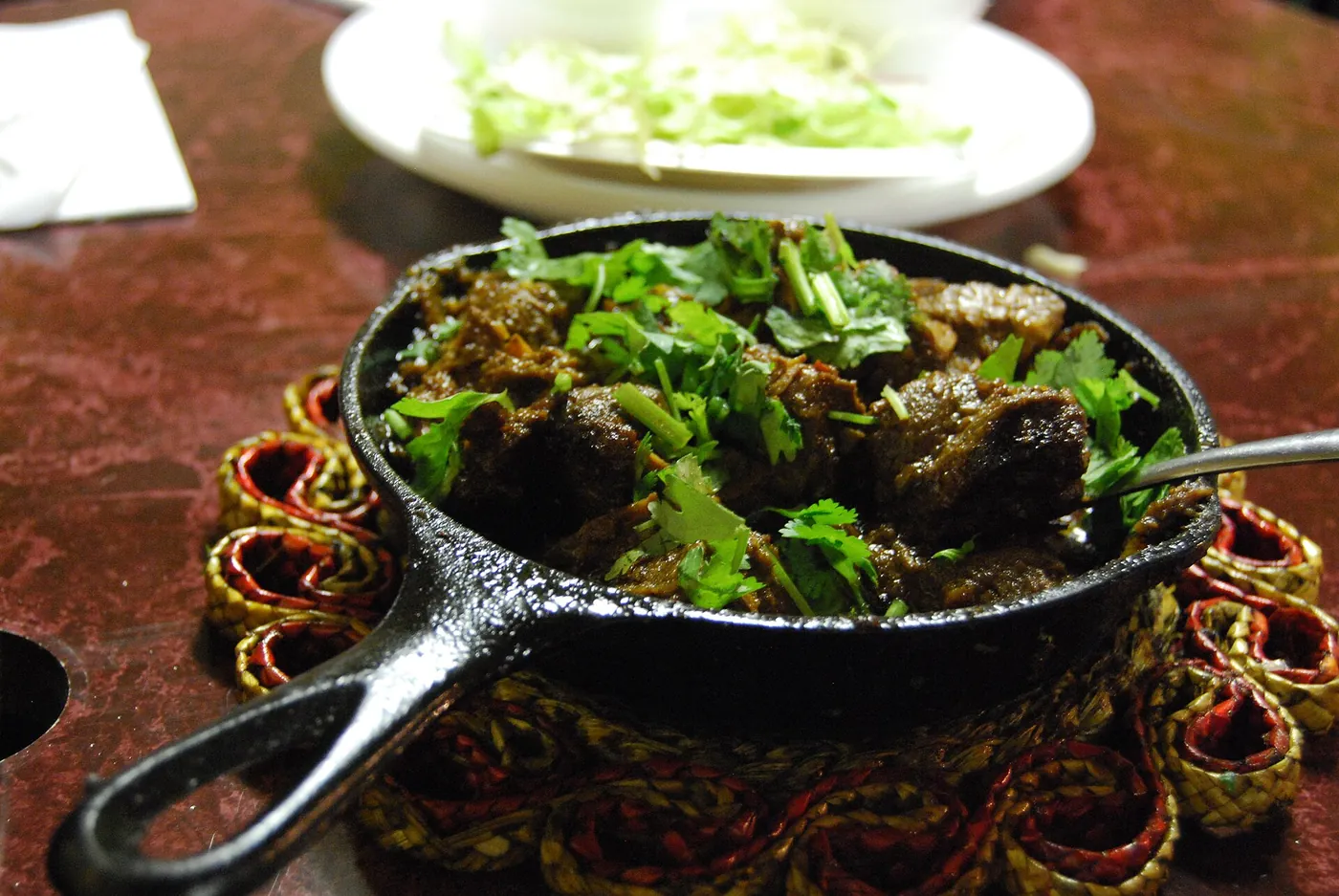
Bone-in mutton cooked down with tomatoes, ginger, garlic and green chillies in a wide karahi until the masala clings to the meat.
Mutton takes far longer to cook than chicken, so this karahi is made in two stages: the meat is cooked tender in a little water first, then finished over high heat with tomatoes and spices in the classic karahi style.
What is mutton karahi?
Mutton karahi is goat or lamb cooked in a karahi, the wide, deep pan it is named after, with tomatoes, ginger, garlic, green chillies and crushed whole spices. The style is associated with the roadside restaurants of Khyber Pakhtunkhwa and Punjab, where it is cooked to order and served in the pan. Some versions, such as Peshawari karahi, use little more than meat, fat, tomato and salt.
Ingredient notes and substitutions
In Pakistan “mutton” usually means goat. Goat cooks faster and has a cleaner flavour than older lamb, so adjust the time to your meat. Crushing the coriander, cumin and black pepper coarsely, rather than using ground spice, gives the dish its texture and aroma.
Common mistakes
Adding the tomatoes before the meat is tender means the tomatoes overcook and turn bitter while you wait. Too much water leaves a thin curry instead of a thick masala; boil off any excess before adding the tomatoes.
What to serve with it
Serve straight from the pan with naan or roti, sliced onions, lemon wedges and raita.
Storage and reheating
Keeps for three days in the fridge and freezes well. Reheat in a pan, adding a splash of water, and top with fresh ginger and green chilli.
Frequently asked questions
Can I use a pressure cooker for mutton karahi?
Yes. Cook the browned mutton with about 250 ml water for 15–20 minutes at full pressure, release the pressure, then finish with the tomatoes and spices in an open pan as written.
What is the difference between karahi and a regular curry?
A karahi is cooked fast over high heat in a wide pan until the masala is thick and clings to the meat, with little or no gravy. A curry, or salan, is usually cooked more slowly with more liquid.