A direct, tomato-led karahi
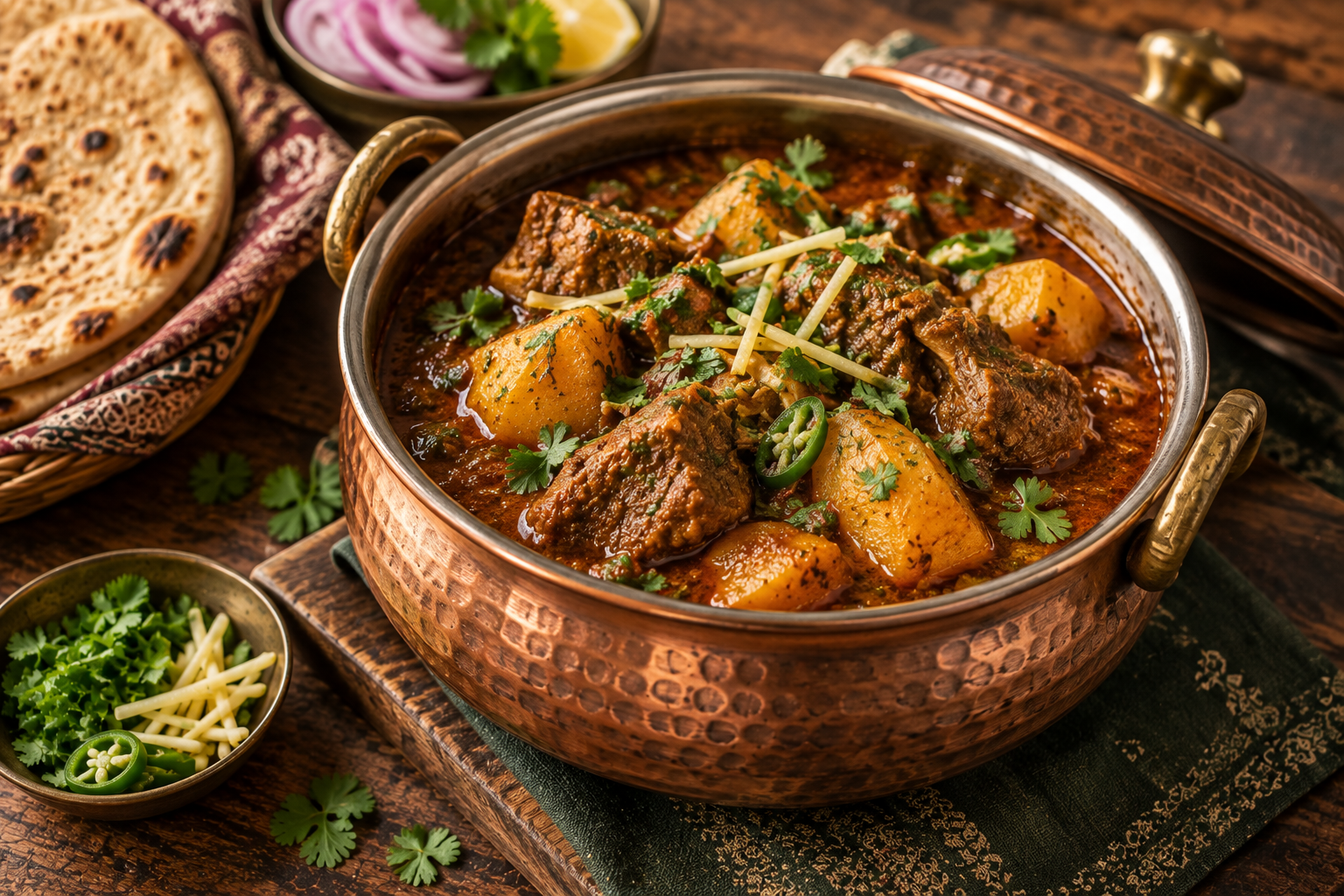
A practical home-kitchen guide to aloo gosht, with measured ingredients and clear steps.
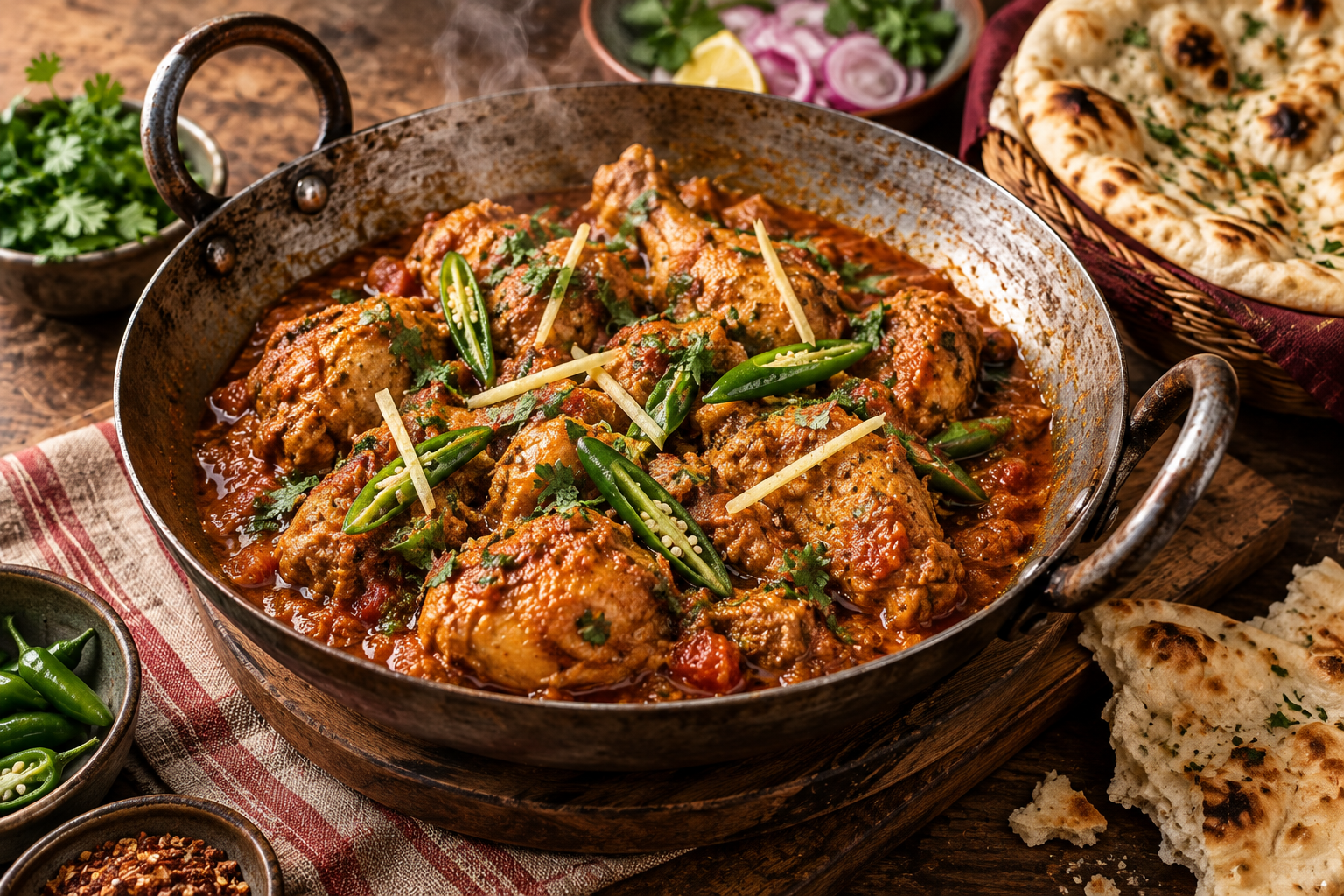
This method focuses on moisture control. A karahi should finish with a concentrated masala that clings to the chicken, not a thin gravy collecting underneath it.
Why this method works
A wide pan creates more surface area for evaporation. Adding the spices after the tomatoes have reduced protects their aroma and helps you judge the final consistency accurately.
What is chicken karahi?
Karahi names both the wide, curved cooking vessel and a family of quick-cooked dishes made in it. Pakistani versions vary by city and household. Many are tomato-forward and finished with ginger, green chilli and coriander.
Ingredient notes and substitutions
Use ripe tomatoes because they form the body of the masala. Bone-in chicken remains juicy during vigorous cooking. If using boneless meat, shorten the final cooking time. Ghee gives a rounder finish, while neutral oil keeps the tomato and ginger clearer.
Common mistakes
Do not add a large amount of water. Keep the pan uncovered while reducing tomatoes, and resist crowding a small saucepan. If the masala looks wet, cook it longer before adding garnish.
What to serve with it
Serve with naan, roti or plain basmati rice. A cool cucumber raita and sliced onions balance the heat without competing with the karahi.
Storage and reheating
Cool promptly and refrigerate in a covered container for up to three days. Reheat gently until piping hot, adding one spoon of water only if needed.
Frequently asked questions
Can I remove the tomato skins?
Yes. Blanch and peel them first for a smoother masala, although it is not essential.
Can I make it less spicy?
Use fewer green chillies and keep them whole. Black pepper can also be reduced at the table.