THE TARKA GUIDE
Why your karahi tastes watery
A watery karahi almost always means the tomato-onion masala was not reduced enough before the meat went in, or water was added later to stop it sticking.
Start with the cooking cue
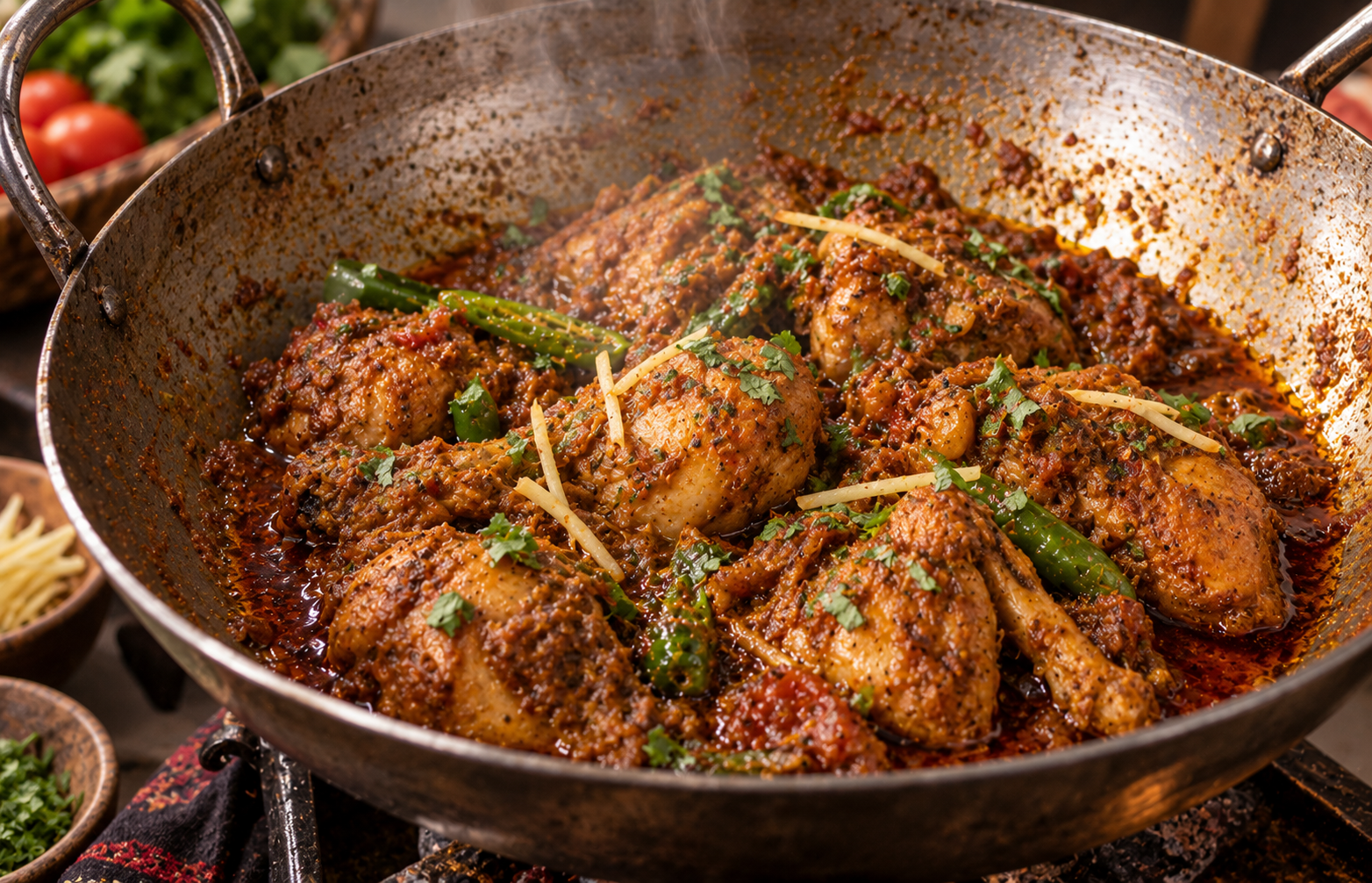
A watery karahi almost always means the tomatoes and onions weren't reduced enough before the meat was added, or too much water was added later to compensate for sticking. The masala should look glossy and thick, with visible oil at the edges of the pan, before you move to the next step — not the other way around.
Control heat and moisture
The fix is patience at the tomato stage: cover the pan for the first several minutes so the tomatoes soften and release their liquid, then uncover and cook over medium-high heat, stirring and pressing the tomatoes until the liquid reduces and the oil separates out and pools visibly. Skipping the covered step, or rushing the uncovered reduction, is the single most common cause of a thin, watery karahi.
Tarka note: Let aroma and texture confirm the clock. Timings vary with pan width and burner strength.
Adjust for your kitchen
If the pan looks like it's about to catch or stick during the uncovered stage, that's a sign to lower the heat slightly, not to add water — adding water at that point dilutes the masala you've been building and undoes the reduction.
Questions cooks ask about this
My karahi is sticking to the pan — should I add water?
No — lower the heat instead. Adding water dilutes the reduced masala you're trying to build and is the main cause of a watery finish.
How do I know when the tomatoes are reduced enough?
The masala should look glossy and thick, with oil pooling visibly at the edges of the pan — that visual cue matters more than a fixed cooking time.
Can I fix a karahi that has already gone watery?
Uncover the pan and keep cooking over medium-high heat, stirring often, until the excess liquid reduces — it takes longer than starting with the right technique, but it works.