A soft, simple lentil and rice pot
Yellow moong dal and rice cooked together with whole spices until soft and loose, finished with a spoonful of ghee.
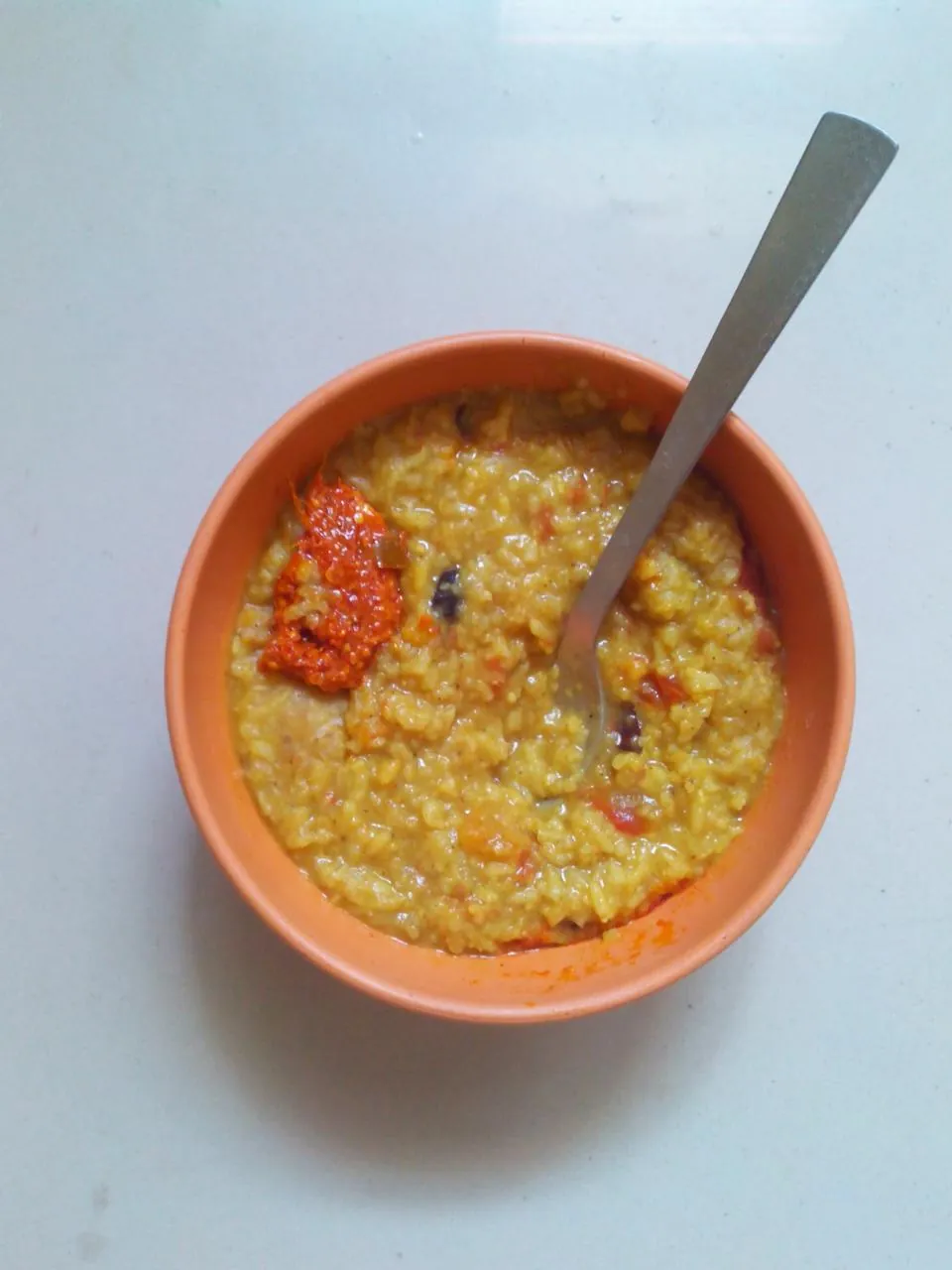
Khichdi is meant to be soft and loose. The dal and rice cook together for long enough to break down into each other, so the texture is closer to a thick porridge than to separate grains.
What is khichdi?
Khichdi is rice and lentils cooked together in one pot. Made with split yellow moong dal, it is one of the gentlest dishes in the Pakistani home kitchen, often cooked for children, for anyone feeling under the weather, or simply on a night when something plain is wanted. Thicker, spicier versions exist, including the meat-based khichra and the dry, grain-separate khichdi of some households.
Ingredient notes and substitutions
Moong dal cooks quickly and breaks down smoothly; masoor dal can be used the same way. The ghee tempering is where most of the flavour comes from, so use real ghee if you can. Khichdi thickens a great deal as it stands, so make it looser than you want to serve it.
Common mistakes
Not stirring and scraping the base lets the khichdi catch and burn, especially towards the end. Too little water gives a stodgy, solid result.
What to serve with it
Serve hot with a spoonful of ghee, plain yoghurt, pickle and papad. In some households it is eaten with a side of kadhi or a simple fried onion topping.
Storage and reheating
Keeps for two days in the fridge. It sets firm when cold; loosen it with hot water while reheating.
Frequently asked questions
Can I make khichdi in a pressure cooker?
Yes. After tempering, add the dal, rice, water, turmeric and salt, cook for 3–4 whistles or about 8 minutes at pressure, then let the pressure release naturally.
Which dal is best for khichdi?
Split yellow moong dal is the most common because it cooks quickly and breaks down smoothly. Masoor dal works the same way.