A chaat assembled at the last minute
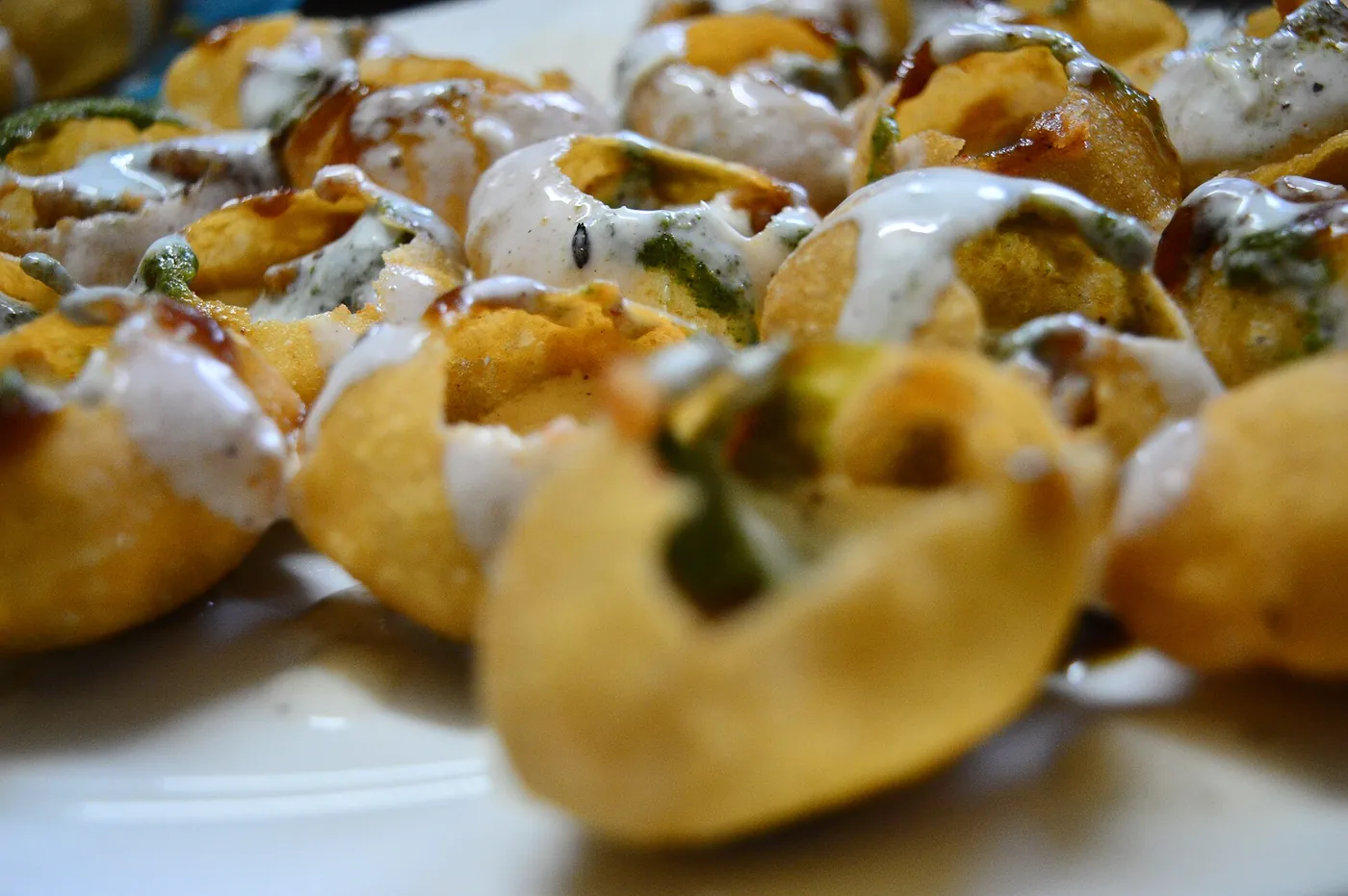
Crisp, hollow puri shells cracked open and filled with potato and chickpeas, then cool sweet yoghurt, chutneys and sev.
Dahi puri is assembly rather than cooking. Everything is prepared ahead and kept separate, and the shells are only cracked and filled at the moment of serving so they stay crisp under the yoghurt.
What is dahi puri?
Dahi puri belongs to the chaat family of savoury snacks. It uses the same small, hollow fried shells as pani puri (golgappay), but instead of spiced water they are filled with potato and chickpeas and covered in cool, lightly sweetened yoghurt, tangy tamarind chutney, green chutney and crunchy sev. It is a favourite at chaat stalls in Karachi and Lahore.
Ingredient notes and substitutions
Ready-made puri shells are sold in packets at South Asian grocers and are what most home cooks use. Chill the yoghurt well: the contrast between the cold yoghurt and the crisp shell is the point of the dish. Taste the filling on its own; it should be slightly over-seasoned.
Common mistakes
Filling the shells too early is the main mistake; they go soft within a few minutes. Watery yoghurt also soaks the shells quickly, so use thick yoghurt and add liquid only if it will not pour.
What to serve with it
Serve six to a plate as a snack or as part of an iftar or party spread, alongside papri chaat or fruit chaat.
Storage and reheating
Do not store assembled dahi puri. Keep the filling, yoghurt and chutneys separately in the fridge for up to two days, and the shells in an airtight container.
Frequently asked questions
Where do I get puri shells?
Ready-made hollow puri shells, sold as golgappa or pani puri shells, are available in packets at most South Asian grocers.
Why is the yoghurt sweetened?
A little sugar balances the sour tamarind chutney and the heat of the spices. The yoghurt should taste mildly sweet, not like dessert.