THE TARKA GUIDE
How to thicken a gravy
Reducing, starch, dairy and nut pastes, and how to pick the right one for a karahi, a dal or a biryani.
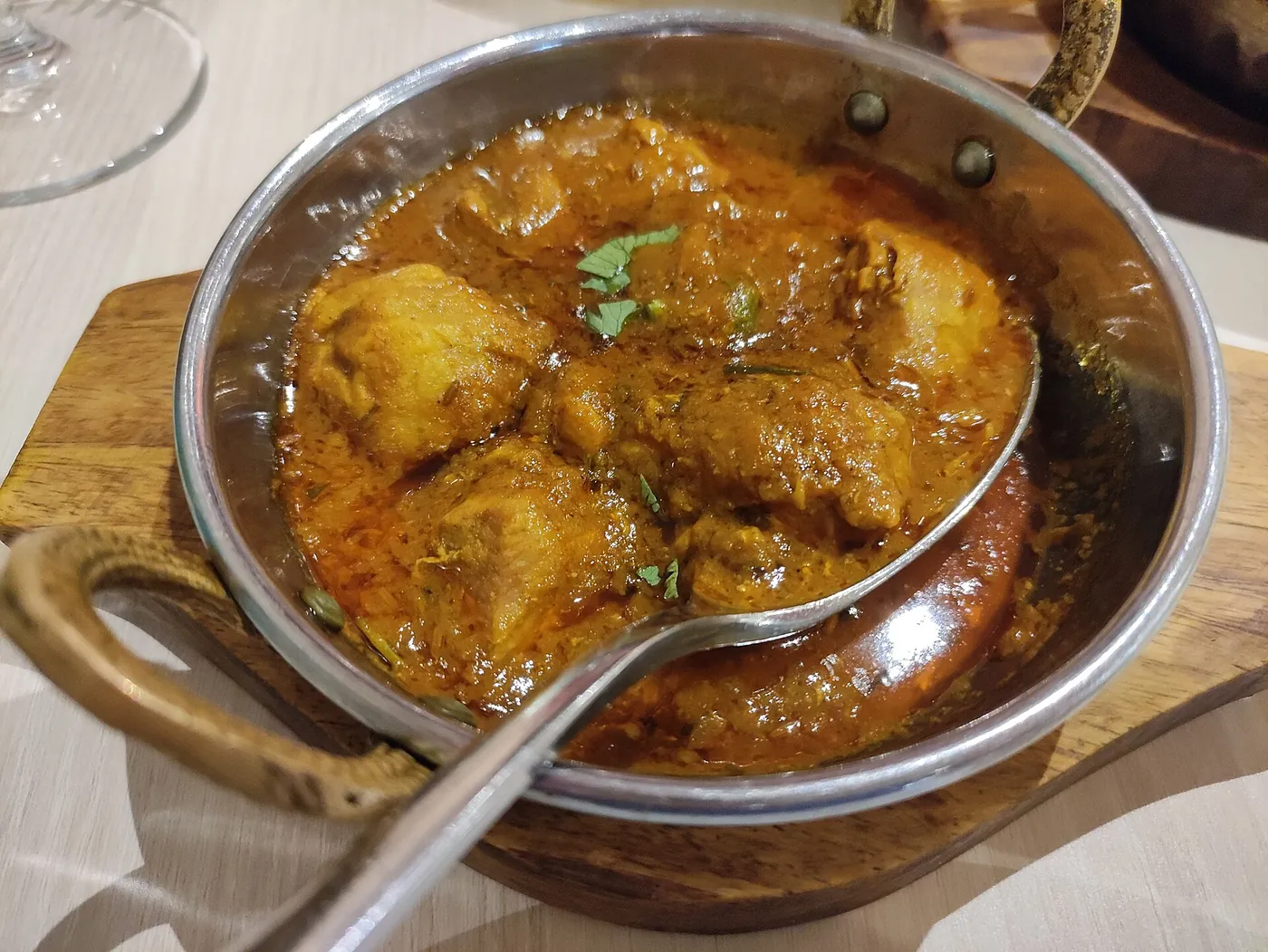
Reduction is usually the best answer
Almost every thickener in a Pakistani kitchen is solving the same problem — a sauce is too thin to coat a spoon — and they are not interchangeable. Reduction is the technique that gives the best flavour, because you are not adding anything, you are concentrating what is already there: the tomato masala darkens, the oil rises and separates, and the aroma intensifies. It is also the only method that works for karahi, where separating the oil from the gravy is the entire point of the dish and is the difference between a karahi and a thin tomato stew. If a sauce is only slightly too thin, simmer it uncovered, stir, and give it five more minutes before reaching for anything else.
Starches, and how much to use
Starch is the fastest correction. A teaspoon of cornstarch or arrowroot whisked into cold water, added while the sauce simmers and cooked for a minute, thickens without changing the flavour much. Cornstarch gives a glossy, translucent finish, which suits a Chinese-style savoury sauce, while arrowroot gives a clearer, thinner glaze and is a better choice when you want the ingredients to stay visible. The single most common error is adding a slurry to a boiling sauce, which sets into lumps instantly — always take the heat down, whisk the slurry into cold liquid first, and add it slowly. Too much starch makes a sauce gluey and dulls whatever is in it, so add half, taste, and add more.
Tarka note: Let aroma and texture confirm the clock. Timings vary with pan width and burner strength.
Dairy, nut and seed pastes
Fat-based and nut-based thickeners change the character of a dish rather than just its consistency. Cream, milk and yoghurt are the standard finish for a North Indian-style gravy, stirred in off the heat so they do not split, and they soften the heat of the spice as well as thickening it. Ground nuts and seeds do something different: almond and cashew pastes thicken a Mughlai sauce and add body and nuttiness, while sesame and peanut pastes give a South Asian sauce its characteristic earthy depth and slight bitterness. Each of these carries flavour forward, so use them when you want the dish to taste richer, not merely heavier.
Thickening a dal without ruining it
A dal needs a different approach again. The usual method is not a thickener at all but the dal itself: mash a portion of the cooked lentils against the side of the pot and let the starch disperse, which thickens the whole pot without any addition. If it is still thin, simmer it longer, uncovered, until it reduces; mashing a ladleful is faster and more controllable than adding flour, which tastes raw in a dal and muddies it. Ghee stirred through at the end adds richness and a sheen, and a spoonful of yoghurt stirred in off the heat softens the whole thing without making it heavy.
Fixing a gravy that has already split or gone thin
Two problems come up often enough to be worth knowing. If a gravy has split, the fat and liquid have separated — usually from boiling hard after dairy went in, or from acid hitting cream — and no amount of stirring brings it back together; the fix is to start over with a little cold liquid, or strain the sauce and finish it as a fresh sauce. If a sauce is too thick, the fix is always hot liquid rather than cold, added a spoonful at a time: cold liquid drops the temperature and can split it, and it dilutes the flavour unevenly. Loosen before you salt, because salt is much harder to recover from than thinness.
Questions cooks ask about this
How do I thicken a curry without flour?
Reduce it first — simmer uncovered for five to ten minutes and stir, which concentrates the flavour as well as thickening it. If you need more, use a cornstarch or arrowroot slurry whisked into cold water and added off a rolling boil, or finish with cream, yoghurt or nut paste.
Why is my karahi gravy thin?
It has not reduced long enough, or too much water went in. Karahi is built on evaporation: simmer uncovered until the tomato masala darkens and the oil visibly separates at the edges of the pan. That separation is the signal that the dish is done, not a garnish to add at the end.
Can I thicken a gravy that has split?
Not by stirring. Splitting means the fat and liquid have separated, usually from boiling dairy or adding acid too early. Loosen it with a little cold liquid and bring it back together gently, or strain it and finish a fresh sauce with the strained liquid as the base.