FOOD & CULTURE
Inside Pakistan’s Sunday breakfast culture
Halwa puri queues, nihari shops and slow mornings at home: why Sunday breakfast in Pakistan’s cities became the meal people go out for.
Why Sunday
Sunday has not always been Pakistan’s day off. From 1977 the weekly holiday was Friday, and it was only in 1997 that the government moved it back to Sunday, partly to align with international business. A generation has now grown up with Sunday as the one morning when nobody has to be anywhere, and in many households, particularly in the big cities of Punjab and in Karachi, breakfast has expanded to fill it. Weekday breakfast is often quick and ordinary. Sunday breakfast is late, shared and frequently bought in.
The halwa puri plate
The best-known Sunday plate is halwa puri. It is three things served together: puri, a small wheat bread deep-fried until it puffs; a chickpea curry, usually called cholay or chana; and a sweet semolina halwa cooked with ghee and sugar, often tinted orange and scattered with nuts. Pickle, sliced onion and a lassi or a cup of chai often come alongside. The appeal is the contrast: hot, crisp bread torn and used to scoop up spicy chickpeas, then a mouthful of the sweet halwa. Making it at home means deep-frying a large batch of puri and keeping three dishes hot at once, which is one reason most people buy it from shops that make nothing else.
Nihari and paye: the heavier end
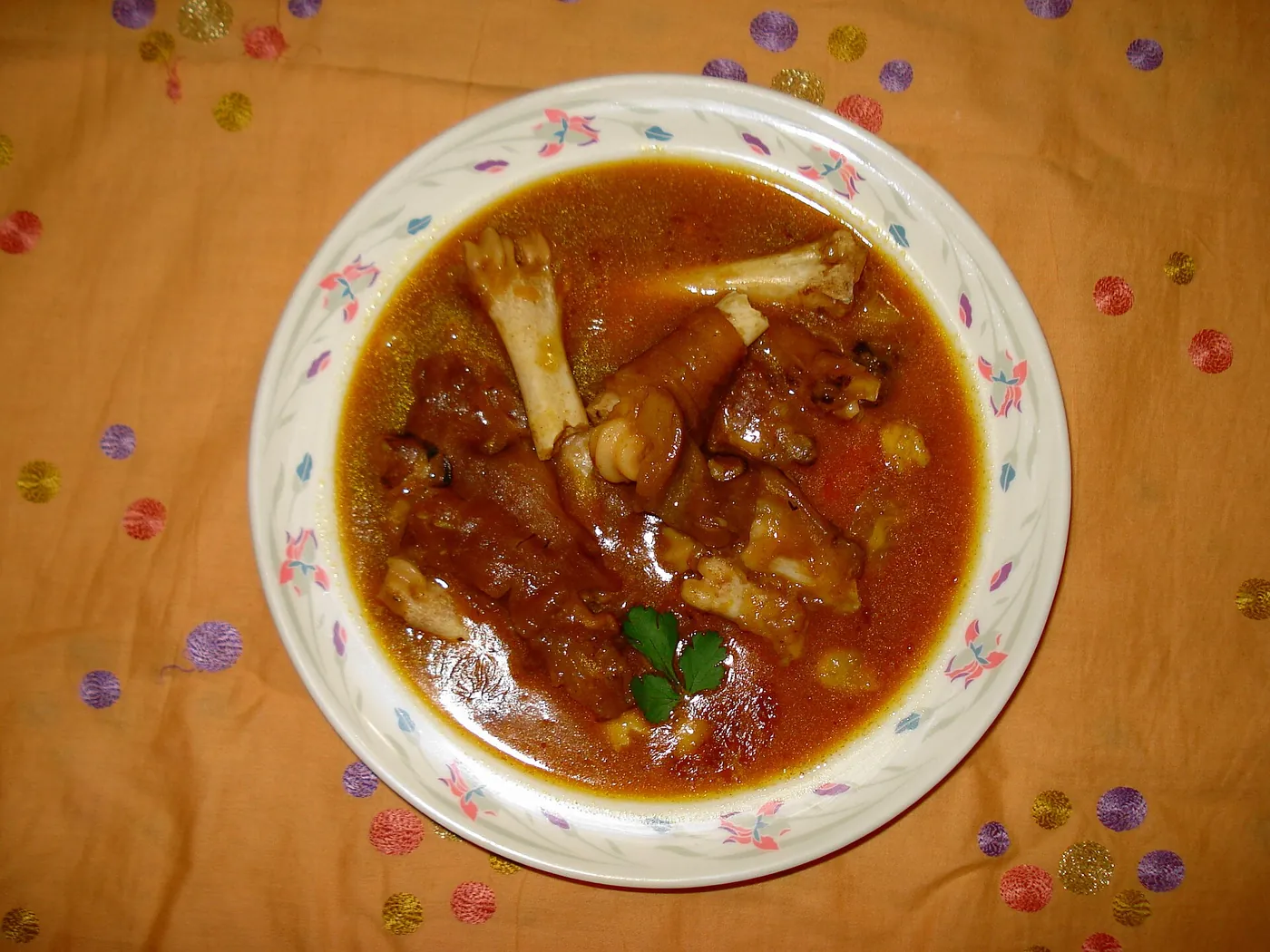
For those who want something heavier, Sunday is also nihari and paye morning. Nihari is a long-simmered stew of beef or mutton shank, thickened with flour and finished at the table with ginger, green chilli and lemon. Its name is commonly traced to the Arabic “nahar”, morning, and the dish is usually linked to Mughal-era Delhi or Lucknow; in Pakistan it is particularly associated with Karachi, where many families who migrated from those cities settled after 1947, and with Lahore. Paye, trotters cooked overnight into a sticky, gelatinous broth, is the other great slow breakfast. Both are cooked in large pots through the night, which makes them ideal for a restaurant and impractical for most homes.
The home version
Households that cook breakfast on Sunday tend to make what they already know how to do well, just more of it. Parathas are rolled and fried one at a time on a tawa and stacked in a cloth to keep warm. Eggs come fried or as an omelette with onion, tomato and green chilli. There may be leftover salan from the night before, warmed through to eat with paratha, yoghurt, a pickle and a pot of chai. None of this is unusual on its own. What makes it a Sunday breakfast is the time spent over it: a table, or a dastarkhwan on the floor, that everyone sits at together for once.
Bought, not made
The defining feature of Pakistan’s weekend breakfast culture is that so much of it is bought rather than cooked. On Sunday mornings, queues form outside well-known halwa puri and nihari shops, and families send someone out early with a stack of empty containers. That habit shapes the food: dishes that benefit from huge pots, continuous frying and overnight cooking have become the weekend treat precisely because they are hard to make at home. Habits vary widely between cities, families and incomes, and plenty of people simply sleep in. But for many households, Sunday breakfast is the one meal of the week that is planned around eating together.
Frequently asked questions
What is in a halwa puri breakfast?
Deep-fried puri bread, a spiced chickpea curry (cholay or chana) and a sweet semolina halwa, usually with pickle, onion and chai or lassi on the side.
Why is nihari eaten for breakfast?
Nihari is cooked slowly for many hours, traditionally overnight, so it is ready in the morning. Its name is commonly linked to the Arabic word for morning, and shops that sell it often open early and sell out by midday.