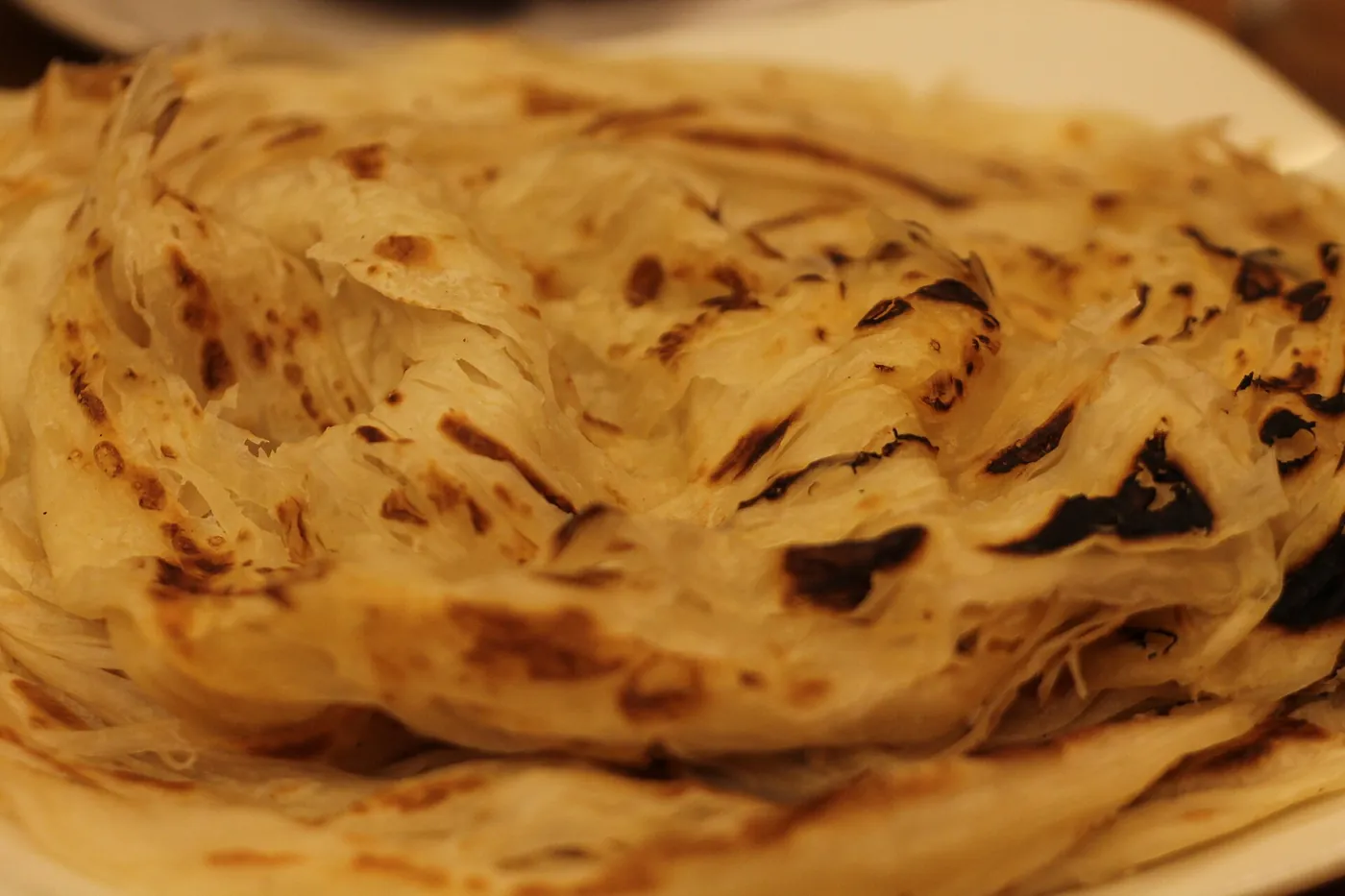
A layered, pan-fried flatbread
A layered wholewheat flatbread, rolled and folded with ghee until flaky — an everyday breakfast that needs no tandoor.
The flaky layers that define a good paratha come from folding technique, not extra ingredients — the dough is rolled thin, folded on itself, then rolled out again before hitting the pan.
What is paratha?
Paratha is a whole-wheat flatbread, folded and layered before being pan-fried in ghee or oil until golden and flaky, unlike roti, which is rolled once and cooked without added fat. It is a breakfast staple across Pakistan, often served alongside eggs, daal or a curry.
Ingredient notes and substitutions
Rest the dough for at least 20–30 minutes before rolling — it relaxes the gluten and makes the dough easier to roll thin without tearing. Brush ghee generously between folds; it is what separates the layers during cooking and gives paratha its flakiness.
Common mistakes
Rolling the dough too thick prevents the layers from forming properly and results in a doughy, underdone centre. Cooking over heat that's too high browns the outside before the inside is fully cooked — medium heat, with patience, gives an evenly cooked, flaky result.
What to serve with it
Serve hot off the pan with a fried egg, plain yogurt, or alongside any curry or daal for scooping — paratha is built to be eaten immediately, not held.
Storage and reheating
Cooked parathas keep refrigerated for up to two days, wrapped to prevent drying out; reheat in a dry pan to bring back some crispness rather than in a microwave. Uncooked dough balls also freeze well for later.
Frequently asked questions
Why isn't my paratha flaky?
Not enough ghee between the folds, or rolling the dough too thick, are the two most common causes — the layers need both the fat and thin rolling to separate properly as they cook.
Can I make paratha dough ahead of time?
Yes — the dough keeps refrigerated for up to a day, or shaped, unfried parathas freeze well between sheets of parchment for longer storage.