Naan without a tandoor
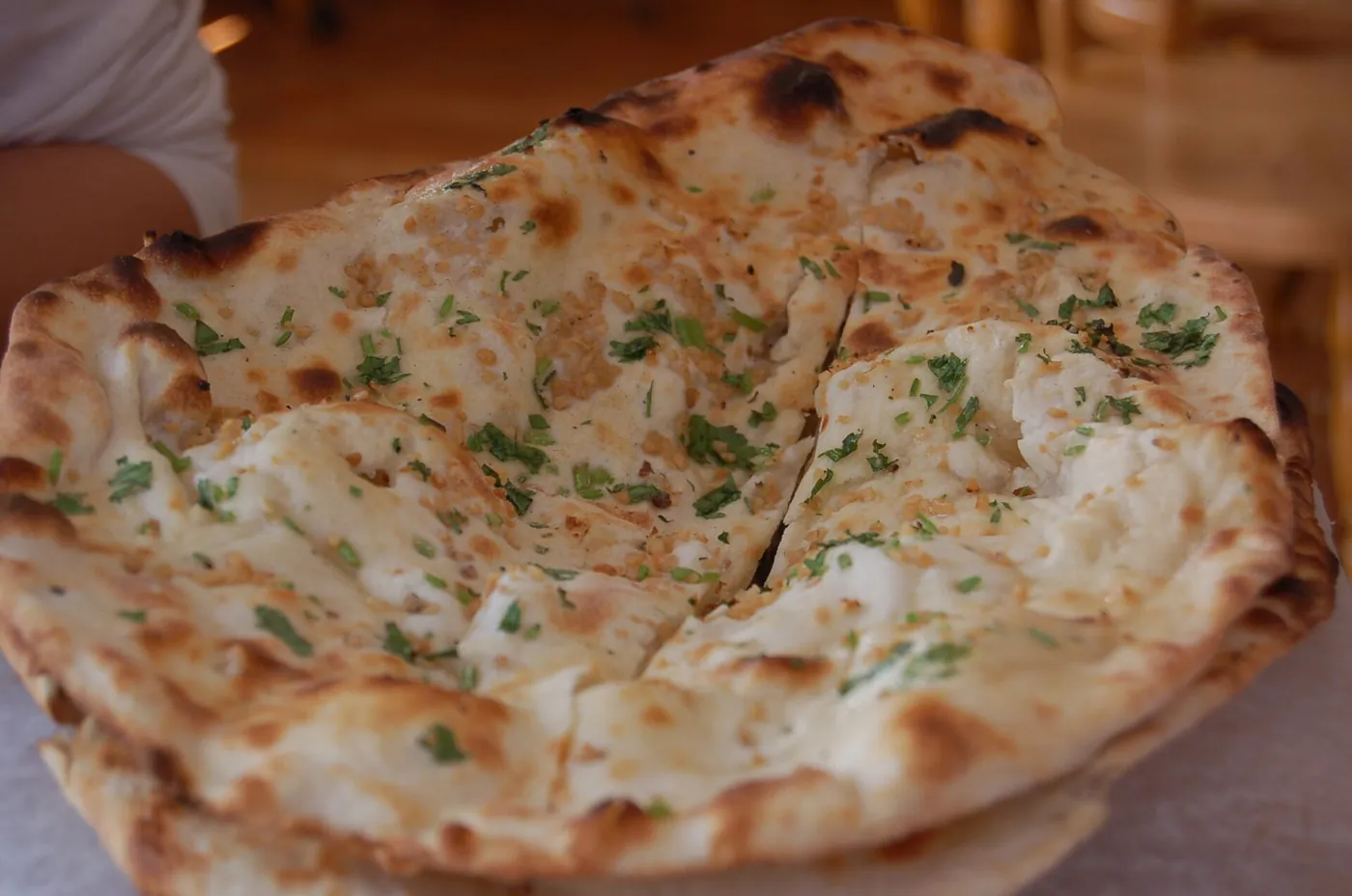
Soft, yeasted naan cooked under a very hot grill or in a heavy pan until puffed and blistered — the closest a home kitchen gets to a tandoor.
A tandoor bakes naan at very high heat from below and above at once. At home, a cast-iron pan heated on the hob for the base and an oven grill on full for the top is the closest substitute.
What is naan?
Naan is a leavened flatbread baked against the wall of a clay tandoor oven. In Pakistan it is mostly bought hot from neighbourhood tandoors rather than baked at home, and eaten with curries, kebabs, karahi and nihari. Variations include roghni naan brushed with milk and sesame, kulcha, and naan stuffed with potato or keema.
Ingredient notes and substitutions
Yoghurt makes the dough softer and gives a slight tang. A soft, slightly sticky dough produces a lighter naan than a firm one. If your grill is weak, cover the pan with a lid for the second minute of cooking to trap heat and steam the top.
Common mistakes
A pan that is not hot enough produces flat, pale naan. Rolling the dough too thick gives a doughy middle; too thin and it turns crisp like a cracker.
What to serve with it
Serve straight away with karahi, nihari, kebabs or daal. Naan dries out quickly, so keep cooked ones wrapped in a cloth.
Storage and reheating
Naan is best eaten the day it is made. Leftovers freeze well; reheat from frozen in a dry pan or wrapped in foil in a hot oven.
Frequently asked questions
Can I make naan without yeast?
Yes. Increase the baking powder to 2 tsp and add ½ tsp bicarbonate of soda; rest the dough for 1 hour. The result is softer and less chewy.
Can I cook naan only on the hob?
Yes. Cook it in the hot pan for a minute, flip, then hold the top briefly over a gas flame with tongs, or cover the pan with a lid for a minute to puff it.