REGIONAL CUISINE
Balochistan
Slow roasting, open-fire techniques and pastoral food traditions.
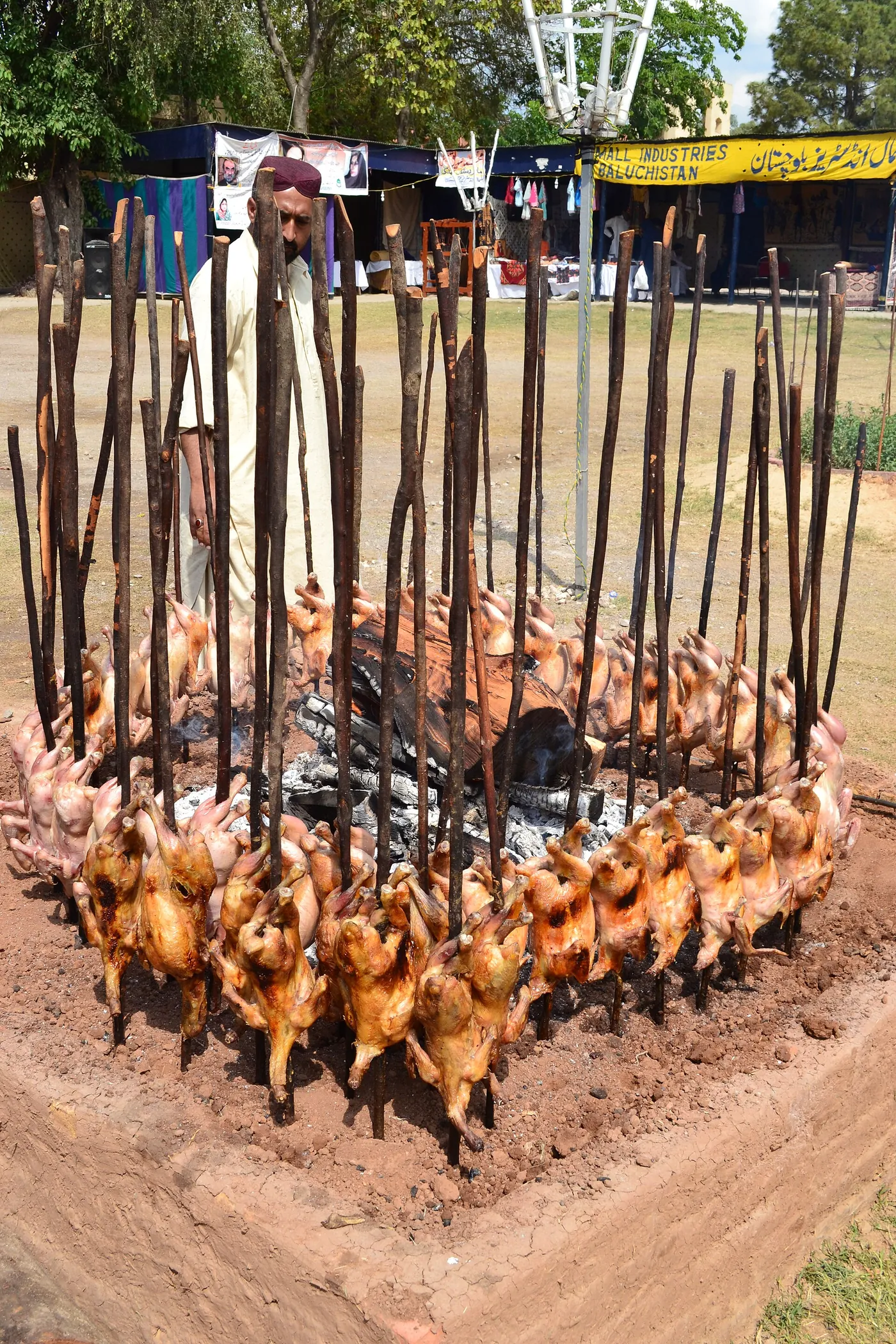
Balochistan is Pakistan’s largest province by area and its least populated, a land of deserts, mountains and a long coastline. Its traditional food comes from a pastoral way of life, in which meat, bread and dairy matter more than spices or vegetables, and cooking happens over open fires.
The best-known Balochi dish, sajji, is lamb or chicken seasoned mostly with salt and slow-roasted on skewers around a fire. Kaak, a dense bread baked by wrapping dough around a hot stone, and landhi, meat salted and dried for the winter, show how the region’s food was built to travel and to last. Sajji is now sold in restaurants across Pakistan, especially in Quetta and Karachi.
Signature dishes
- Sajji. A whole leg or side of lamb, marinated in little more than salt, skewered and slow-roasted upright beside an open fire — no wet marinade, no heavy spice.
- Kaak. A dense, unleavened bread traditionally cooked by wrapping the dough around a stone heated in the fire, often eaten with sajji.
- Landhi. Salt-cured, air-dried lamb or mutton, prepared in winter and stored for months — a preservation method rooted in the region's nomadic, pastoral lifestyle.
Regional ingredients
Lamb, Salt as the primary seasoning, Open-fire cooking rather than a stovetop or oven. Balochi cooking is defined more by method than by spice — salt, fire and time do most of the work, with very little else added to the meat.
Traditions
Nomadic and pastoral food history, Open-fire cooking over stovetop methods, Winter meat preservation (landhi). Balochistan's food traditions come from a historically pastoral, mobile way of life, which is why techniques favour preservation and simple open-fire cooking over the multi-step, pantry-dependent methods common elsewhere in Pakistan.