A slow Punjabi winter dish
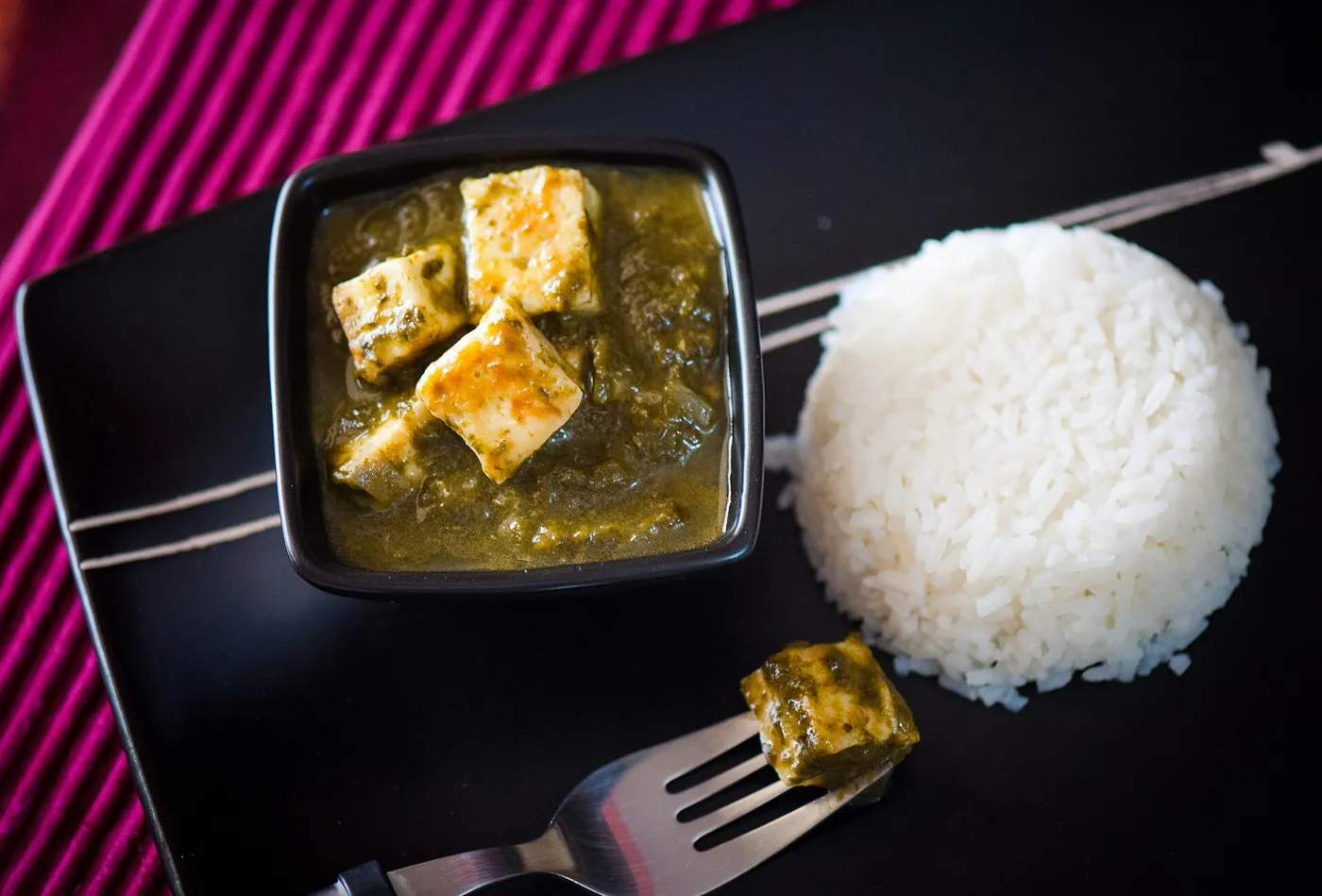
Punjabi winter greens: mustard leaves and spinach simmered soft, thickened with maize flour and finished with a garlic tarka and butter.
Sarson ka saag depends on cooking the mustard greens long enough to lose their sharp bite and soften their thick stems, then thickening the purée with maize flour so it is rich and spoonable.
What is sarson ka saag?
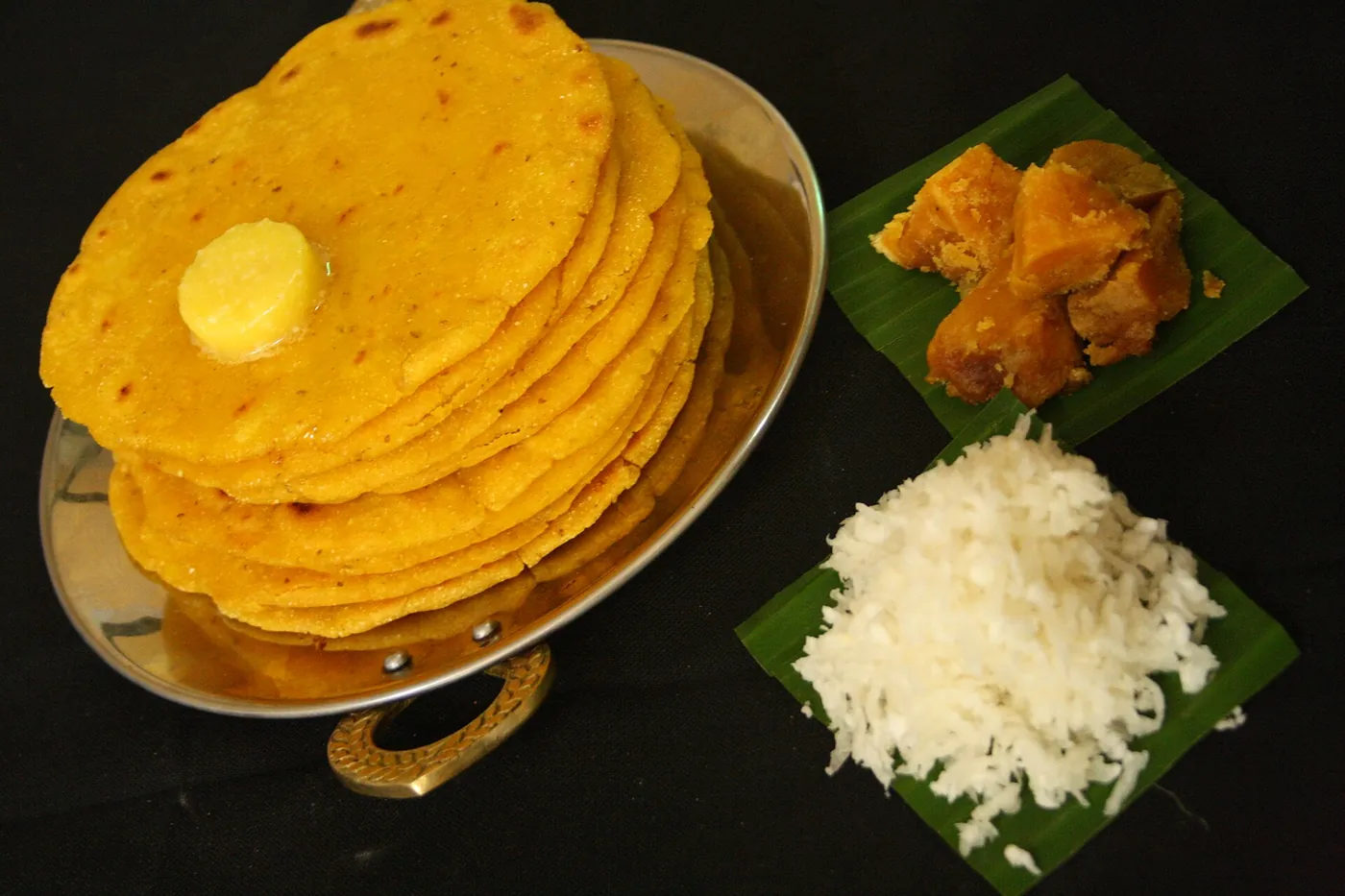
Sarson ka saag is a Punjabi dish of mustard greens cooked down with spinach (and sometimes bathua, a wild green) into a thick, coarse purée. It is a winter dish, made when mustard is in season, and it is traditionally eaten with makki di roti, a flatbread made from maize flour, and a generous lump of white butter.
Ingredient notes and substitutions
Mustard greens on their own are bitter and peppery; spinach softens the flavour and adds body. Look for young, tender mustard leaves. Maize flour both thickens the saag and links it to the makki di roti it is served with. If you cannot find maize flour, a tablespoon of fine cornmeal works.
Common mistakes
Undercooked mustard greens taste harsh and leave stringy stems, so cook them until the stems crush easily. Blending to a completely smooth purée loses the texture that defines saag; aim for coarse.
What to serve with it
Serve hot with makki di roti, plenty of white butter, a glass of lassi, and sliced raw onion or radish. Plain roti or paratha works if you have no maize flour bread.
Storage and reheating
Saag keeps for four days in the fridge and freezes well. Reheat gently with a splash of water and add the butter fresh when serving.
Frequently asked questions
Can I make sarson ka saag without mustard greens?
Not really — mustard greens are the dish. If you can only find a small amount, mix them with more spinach, kale or turnip greens, but the flavour will be milder.
What is makki di roti?
A flatbread made from maize flour (makki ka atta) mixed with warm water, patted out by hand and cooked on a tawa with butter or ghee. It is the traditional partner for sarson ka saag.