A tea-leaves-boiled-in-milk chai
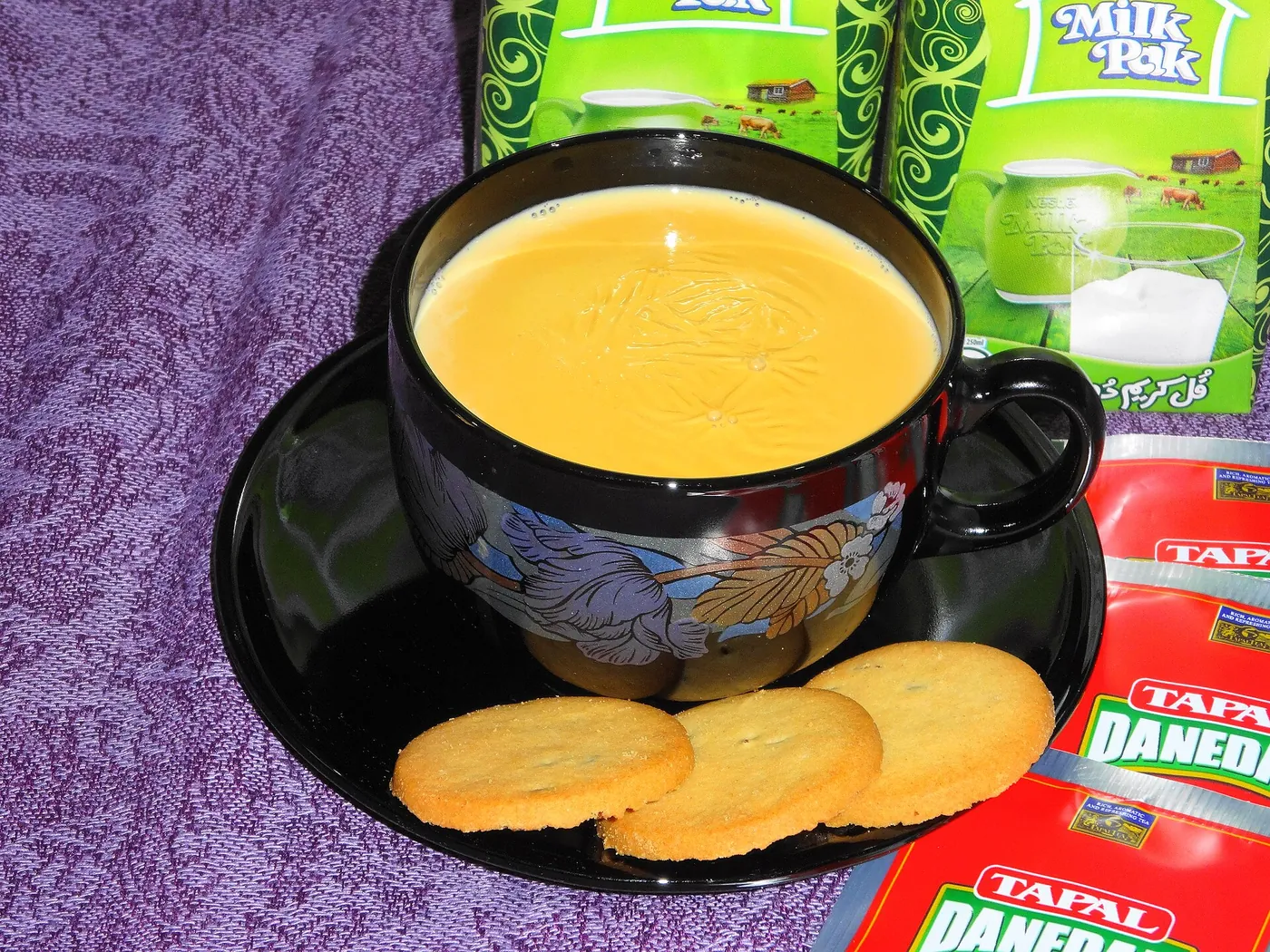
Tea leaves boiled directly in milk until deep tan and strong — richer and more tannic than tea steeped in water with milk added later.
Doodh patti's defining trait is that the tea leaves are boiled directly in milk rather than steeped in water first — that single difference is what gives it a stronger, creamier result than a standard milk tea.
What is doodh patti?
Doodh patti (literally "milk leaves") is a Pakistani-style milk tea where black tea leaves are boiled directly in milk, rather than brewed in water and then lightened with milk. The result is stronger, creamier and more opaque than a standard cup of tea, and it is the default way chai is made in most Pakistani households.
Ingredient notes and substitutions
Use loose black tea leaves rather than tea bags for a fuller flavour, and let the milk come to a proper boil, not just a simmer, before adding the leaves. Boiling the tea longer intensifies both the colour and strength — adjust boiling time to taste rather than following a fixed clock.
Common mistakes
Boiling the milk over heat that's too high causes it to boil over quickly and unevenly — keep a close eye once it starts rising. Adding sugar before the tea has finished boiling can also cause it to catch on the bottom of the pan; stir sugar in at the end instead.
What to serve with it
Serve hot, on its own or alongside something to dip — a rusk biscuit or a slice of paratha are both common pairings for a proper chai break.
Storage and reheating
Doodh patti is best made fresh and served immediately — reheating tends to make it taste flat and can cause the milk to separate slightly. Make only as much as will be drunk in one sitting.
Frequently asked questions
Why does my doodh patti taste weak compared to what I've had in Pakistan?
It likely needs a longer boil, or more tea leaves relative to milk — doodh patti is meant to be strong, and boiling time (not just leaf quantity) is what develops that strength.
Can I use tea bags instead of loose leaves?
You can, but loose leaves generally give a fuller, more traditional flavour since more of the leaf surface is exposed to the boiling milk.