REGIONAL CUISINE
Kashmir
Fragrant rice, slow-cooked meat and warming breads suited to mountain seasons.
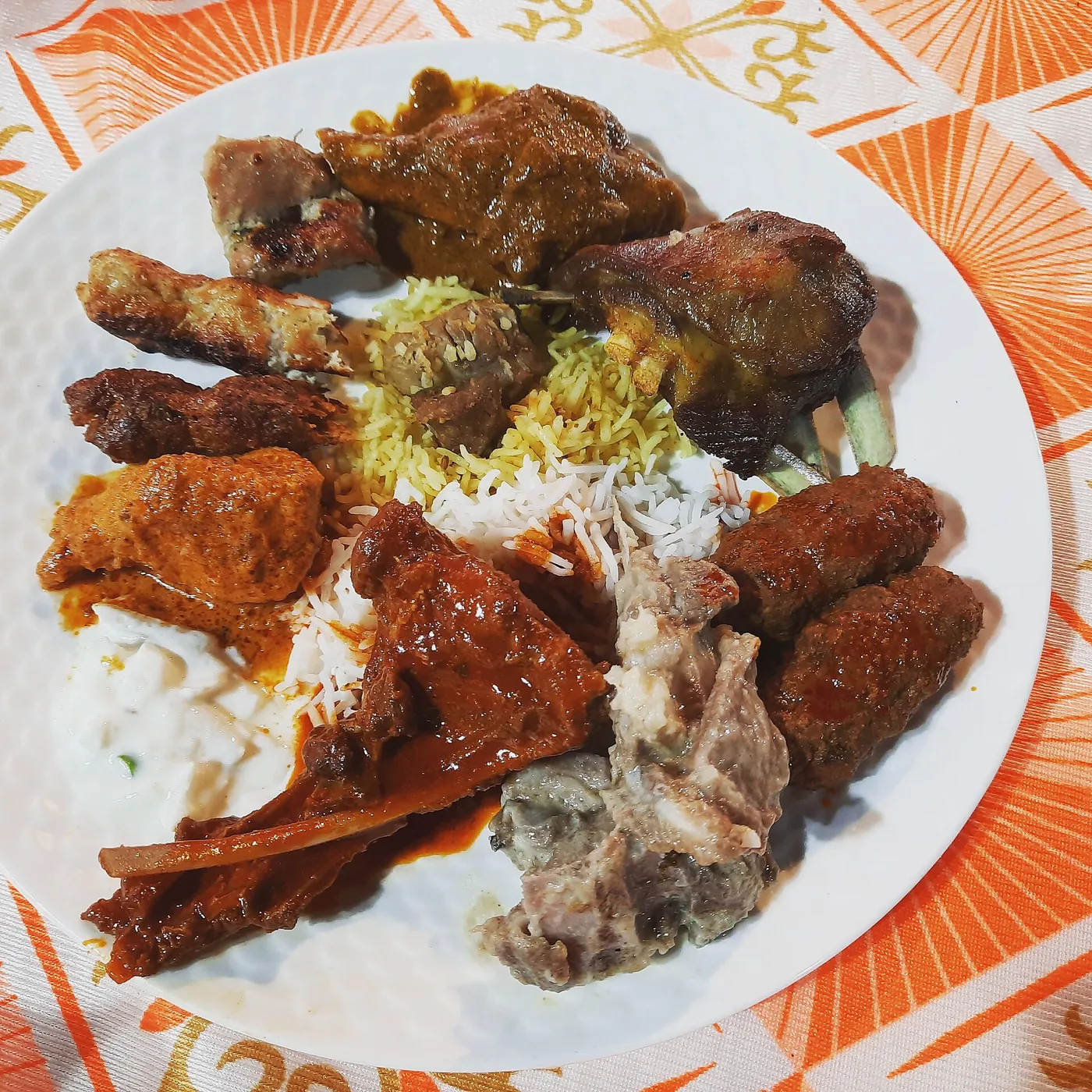
Kashmiri food is shared across the wider Kashmir region, including Azad Jammu and Kashmir on the Pakistani side. Its cooking relies on yoghurt, fennel, dried ginger and Kashmiri chilli, which gives colour more than heat, rather than on the tomato and onion base common elsewhere in Pakistan.
Its most formal expression is the wazwan, a multi-course feast of meat dishes served at weddings, prepared by specialist cooks and ending with gushtaba. Everyday food is simpler: rice, greens, and pink noon chai drunk with breads such as bakarkhani and girda. In winter, harissa, a slow-cooked meat and rice paste, is sold early in the morning as a warming breakfast.
Signature dishes
- Harissa. Mutton slow-cooked overnight with rice and spices and pounded into a smooth paste, sold early in the morning as a winter breakfast.
- Gushtaba. Finely pounded meatballs cooked in a yoghurt-based gravy, considered the closing dish of a formal Kashmiri multi-course meal.
- Bakarkhani. A flaky, layered bread baked crisp in a tandoor and usually eaten with noon chai, the salted pink tea, rather than with curry.
Regional ingredients
Slow-cooked meat, Yoghurt-based gravies, Warming whole spices — fennel and dry ginger. Kashmiri cooking favours yoghurt over tomato as a gravy base, and leans on warming spices like fennel and dried ginger suited to a colder, mountainous climate.
Traditions
Wazwan multi-course meal tradition, Copper cookware (degchi), Noon chai (pink tea). The wazwan — a multi-course meal of pounded and slow-cooked meat dishes served at weddings and major occasions — is the most formal expression of Kashmiri cooking, with gushtaba traditionally marking its final course. Kashmiri food is shared across the wider Kashmir region, including Azad Jammu and Kashmir on the Pakistani side.