THE TARKA GUIDE
How to marinate chicken for grilling
Why an overnight yoghurt marinade works, what acid and salt actually do to the meat, and how to keep it tender instead of mushy.
What a marinade is actually doing
A marinade is doing three separate jobs at once, and most failures come from not understanding which one you are actually relying on. Oil and fat carry fat-soluble flavour into the surface of the meat. Salt draws it in. Acid changes the protein structure directly. What acid and salt do not do is travel all the way to the centre of the piece, which is why no marinade, however long, seasons the middle of a large breast the way a brine does. For skewered, thin-cut chicken — which is what grilling and tikka actually use — that is not a problem, because the pieces are small enough for the surface seasoning to reach the centre.
Yoghurt, acid and salt, in that order
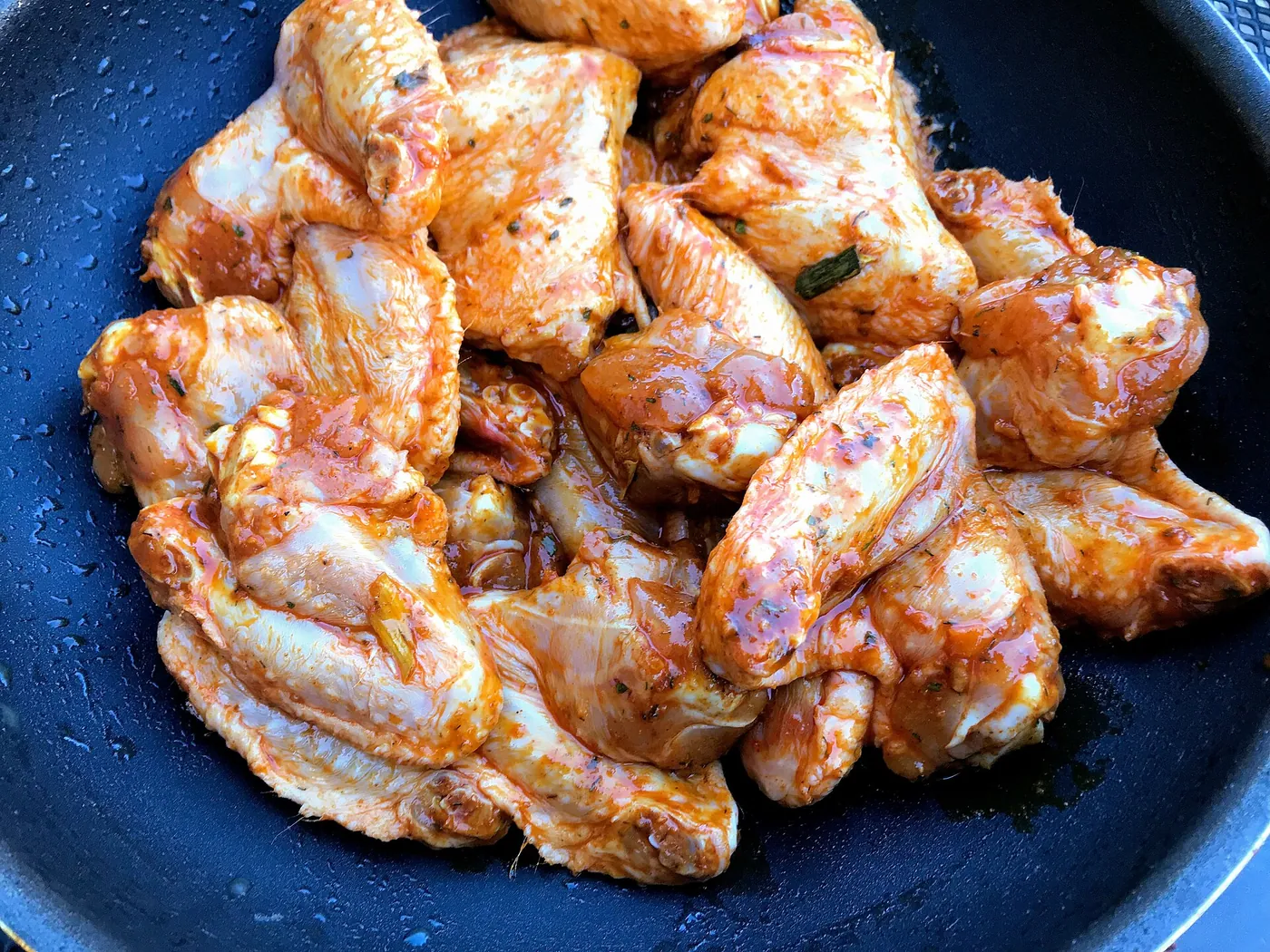
Build the marinade in the order that works. Start with the acid, since it needs time on the surface to do anything: lemon juice, which is mild and bright, or vinegar for a sharper note. Add the salt next, then the yoghurt, which is the component that does most of the work in Pakistani grilling. Yoghurt is not just a thickener. Its lactic acid works like a tenderiser, breaking down the surface proteins slightly so the meat stays juicy through high heat, and its fat and solids cling to the chicken and form the crust that chars.
Tarka note: Let aroma and texture confirm the clock. Timings vary with pan width and burner strength.
How long is long enough
Timing is the part most home cooks get wrong, and it runs both ways. Under an hour does almost nothing: the surface is seasoned, the acid has barely started, and the yoghurt has not had time to tenderise. Four hours is a reasonable minimum. Overnight, eight to twelve hours, is where the difference is obvious. Beyond roughly twenty-four hours, particularly for chicken breast, the lactic acid has gone too far and the meat turns chalky and breaks apart on the skewer — the same failure mode as over-marinating in buttermilk or a brine.
Getting the char without the raw middle
The char comes from heat, not from the marinade. Grilling needs a surface hot enough to blacken the yoghurt layer, which means a grill pan or tawa taken to the point of smoking rather than a moderate oven, and it means leaving the chicken alone once it is down. Turn it once, not five times, and let the sugars in the yoghurt and any honey or oil in the marinade catch and blacken. If the outside is browning but the inside is raw, the answer is almost always to cut the pieces smaller rather than to cook longer, since a thick piece sears on the outside long before its centre catches up.
What not to put in a marinade
The standard mistakes are all avoidable. Puree added too early burns on the grill and turns bitter, so add most of the garlic and ginger powder late or use them as a separate marinade for the meat rather than a glaze. Sugar and honey burn quickly, so brush them on for the last minute rather than marinating in them. And resist the urge to strip the marinade off before grilling: the yoghurt crust is the best part, so spoon it on and wipe off only the loose, watery liquid at the bottom of the bowl, which is what steams instead of searing.
Questions cooks ask about this
How long should I marinate chicken tikka?
At least four hours, and overnight is better. Leave it much longer than twenty-four hours and the yoghurt will have tenderised the meat past the point where it holds together on a skewer, so overnight is the practical ceiling rather than a minimum.
Do I need yoghurt in a chicken marinade?
For grilling, yes. Yoghurt tenderises the surface and forms the crust that chars, which is most of what makes grilled Pakistani chicken taste like grilled Pakistani chicken. Lemon juice and salt work on their own but give you seasoned chicken with no crust.
Can I grill marinated chicken in an oven?
You can, but you will get far less char than on a grill pan, because the oven moves hot air rather than conducting heat into the surface of the meat. Use the highest setting with the grill element on, finish under the broiler for two to three minutes to crisp the top, and expect a roast rather than a char.