THE TARKA GUIDE
Understanding bhuna, dum and tarka
Bhuna builds a masala base by frying it down, dum is a sealed low-heat steaming step, and tarka is a finishing pour of spiced oil.
Start with the cooking cue
Bhuna, dum and tarka are three distinct cooking techniques that often get grouped together, but they happen at different points in a dish and do different jobs. Bhuna is the active frying-down of onions, tomatoes and spices into a thick, oil-separated masala — it's a base-building step, done at the start or middle of cooking.
Control heat and moisture
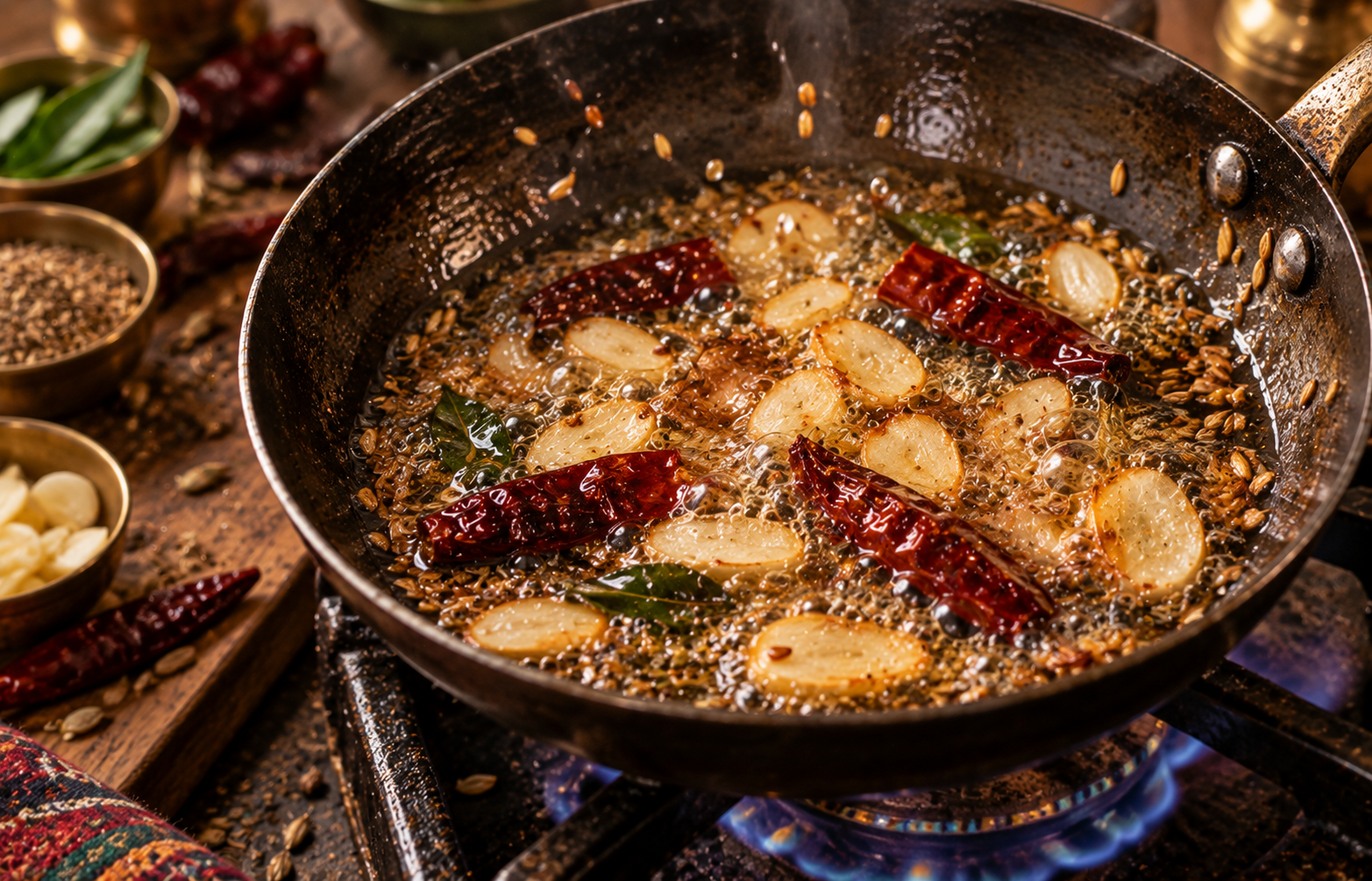
Dum is the opposite: a low, sealed, largely hands-off steaming step done at the end of cooking, most familiar from biryani, where the pot is sealed and left on very low heat so the rice finishes cooking in trapped steam and aroma rather than active stirring. Tarka (also called baghaar) is a finishing technique — a small amount of oil or ghee heated with whole spices and poured over an already-cooked dish, usually daal, right before serving.
Tarka note: Let aroma and texture confirm the clock. Timings vary with pan width and burner strength.
Adjust for your kitchen
The three rarely overlap in the same dish: a curry is typically bhuna'd to build its base, a biryani is dum'd to finish its rice, and a daal is tarka'd right at the end for aroma. Knowing which stage a recipe means when it uses one of these words is the difference between reducing a masala properly and accidentally skipping a step meant to happen at the end.
Questions cooks ask about this
Is tarka the same thing as bhuna?
No — bhuna is an active frying-down step used to build a dish’s base, while tarka is a finishing touch poured over an already-cooked dish, usually daal, right before serving.
What does 'on dum' mean in a recipe?
It means the pot is sealed and left on very low heat, undisturbed, so the contents, most often biryani rice, finish cooking in trapped steam rather than through active stirring.
Can I skip the tarka step in a daal recipe?
You can, but it changes the dish meaningfully — the tarka is where most of the aromatic top-note flavour comes from, even though the daal underneath is already fully cooked.