THE TARKA GUIDE
How to keep biryani rice separate
Rinse and soak the rice to remove surface starch, then stop boiling it at about 70% cooked so it finishes on dum instead of turning starchy.
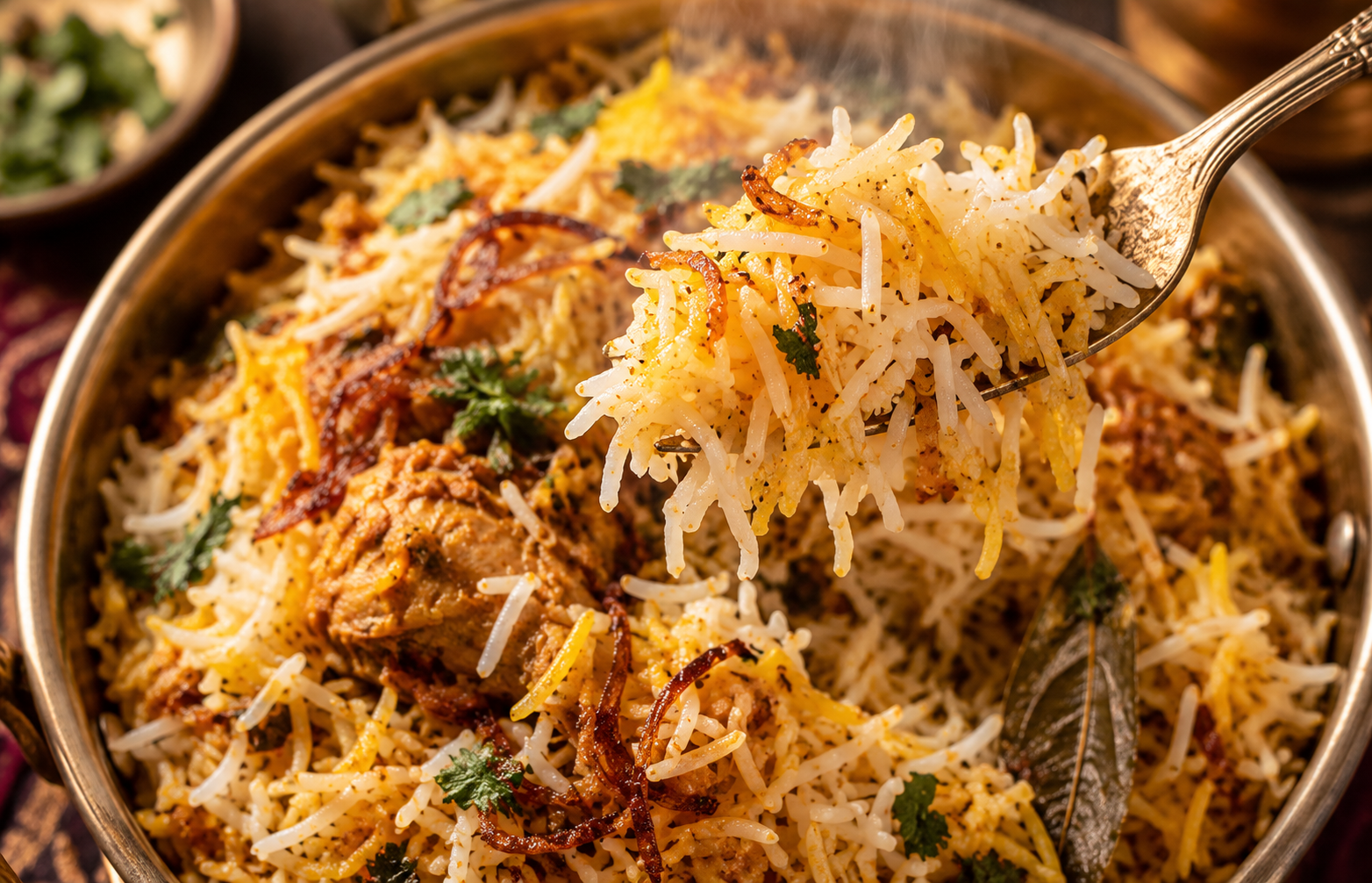
Start with the cooking cue
The rice in biryani turns clumpy for one of two reasons: too much residual starch on the grains, or overcooking before the dum (steaming) stage. Rinse basmati rice in several changes of water until it runs mostly clear, and soak it for 20–30 minutes before boiling — both remove the surface starch that causes grains to stick together.
Control heat and moisture
Boil the rice only until it's about 70% cooked — still with a firm white core if you bite into a grain — then drain it immediately. It finishes cooking during the dum stage, absorbing steam and aroma from the meat layer beneath it rather than more water, which is what keeps each grain intact instead of turning starchy.
Tarka note: Let aroma and texture confirm the clock. Timings vary with pan width and burner strength.
Adjust for your kitchen
If your biryani still clumps, the most common causes are rice that was not rinsed enough, rice boiled past the 70% mark, or too much liquid left in the pot when the dum starts. A tight-fitting lid, sealed with dough or foil if needed, and a low, even heat for the final steaming step matter as much as anything done to the rice itself.
Questions cooks ask about this
Can I use rice other than basmati for biryani?
You can, but expect a different result — shorter or stickier grains won't separate as cleanly, since basmati's low starch content and grain elongation on cooking are specifically why it's used.
Why does my biryani turn out mushy even after rinsing the rice?
This usually means the rice was boiled too far before the dum stage. Aim for about 70% cooked, firm at the centre, since it keeps cooking in the sealed pot afterward.
Do I need to soak the rice before boiling?
Soaking for 20–30 minutes isn't strictly required, but it shortens the boiling time needed and further reduces surface starch, both of which help keep the grains separate.